“For Paley, a watch is purposeful and thus must have been created by a being with a purpose. A watch needs a watchmaker, just as a world needs a world-maker—God. Yet both Wallace and Paley might have heeded the lesson from Voltaire's Candide (1759), in which Dr. Pangloss, a professor of "metaphysico-theology-cosmolonigology," through reason, logic, and analogy "proved" that this is the best of all possible worlds: '"Tis demonstrated that things cannot be otherwise; for, since everything is made for an end, everything is necessarily for the best end. Observe that noses were made to wear spectacles; and so we have spectacles. Legs were visibly instituted to be breeched, and we have breeches" (1985, p. 238). The absurdity of this argument was intended on the part of the author, for Voltaire firmly rejected the Panglossian paradigm that all is best in the best of all possible worlds. Nature is not perfectly designed, nor is this the best of all possible worlds. It is simply the world we have, quirky, contingent, and flawed as it may be.”
Quote by Michael Shermer
Work
This book delves into the psychological and social factors that contribute to the acceptance of unfounded beliefs and practices, examining various phenomena across different cultures and historical periods. more
Author
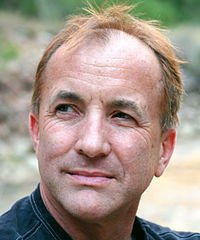
Michael Shermer is an American writer, historian, and science writer. Born on September 8, 1954, he is known for his research on science, pseudoscience, and rational behavior. Shermer is a contributing writer for 'Scientific American' magazine and the founder and publisher of 'Skeptic' magazine. His writings cover a wide range of topics from history to scientific philosophy. more
You May Also Like
“You want a shadow, you got to have light and something to get in its way.”
“It is from their foes, not their friends, that cities learn the lesson of building high walls”
“Persistence wears down resistance.”
“To think or not to think? That is the new question.”
“Wrong way to think about it. Don't try to figure it out all at once.”