Quotessence
Home / Quotes / Quote by David Morrell

Quote by David Morrell

“I don't kill for a living." "Of course not. You tolerate a system that lets others do it for you. And when they come back from the war, you can't stand the smell of death on them.”

Quote by David Morrell

Work

First Blood

First Blood is a novel that delves into the life of John Rambo, a soldier who returns home from the Vietnam War and struggles to adapt to civilian life. The story follows his journey as he becomes a lone warrior, dealing with the psychological and physical scars of war. The novel is known for its intense action sequences and portrayal of the effects of war on individuals. more
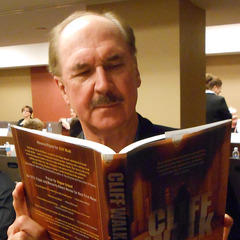
Author

David Morrell
David Morrell

David Morrell is an American novelist known for his suspense and thriller novels. His works often blend historical and fictional elements to create engaging stories. Born on April 24, 1943, Morrell's writing career began in the 1970s. more

You May Also Like

“I did not make any of the correct political reflections. I never do when things are happening. It seems to be always the case when I get mixed up in war or politics. I am conscious of nothing save physical discomfort and a deep desire for this damn nonsense to be over. Afterwards I can see the significance of events but while they're happening I merely want to be out of them.”

“A motorcycle out on the trunk road, snarling cocky as a fighter plane, bypasses the village, heading up to London. The great balloons drift in the sky, pearl-grown, and the air is so still that this morning's brief snow still clings to the steel cables, white goes twisting peppermint-stick down thousands of feet of night. And the people who might have been asleep in the empty houses here, people blown away, some already forever... are they dreaming of cities that shine all over with lamps at night, of Christmases seen again from the vantage of children and not of sheep huddled so vulnerable on their bare hillside, so bleached by the Star's awful radiance? or of songs so funny, so lovely or true, that they can't be remembered on waking .dreams of peace time. "What was it like? Before the war?”

“Dr. Rozsavölgyi tends to favor a powerful program over a powerful leader. Maybe because this is 1945. It was widely believed in those days that behind the War-all the death, savagery, and destruction-lay the Führer-principle. But if personalities could be replaced by abstractions of power, if techniques developed by the corporations could be brought to bear, might not nations live rationally? One of the dearest Postwar hopes: that there should be no room for a terrible disease like charisma... that its rationalization should proceed while we had the time and resources.”