Quotessence
Home / Quotes / Quote by Simone de Beauvoir

Quote by Simone de Beauvoir

“France was no longer a prison, the borders were opening up again, and life shouldn't be a prison either. Four years of austerity, four years of working only for others — that was a lot, that was too much. It was time now for him to think a little about himself.”

Quote by Simone de Beauvoir

Author
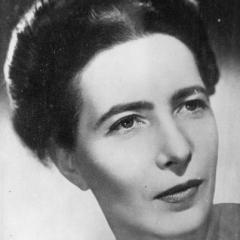
Simone de Beauvoir
Simone de Beauvoir

Simone de Beauvoir was a French writer, philosopher, feminist, and social activist. Known for her profound philosophical thoughts and her advocacy for women's status, she is one of the most influential female thinkers of the 20th century. Her works spanned various genres, including novels, philosophical essays, plays, and memoirs, with her most famous work being 'The Second Sex'. more

You May Also Like

“I did not make any of the correct political reflections. I never do when things are happening. It seems to be always the case when I get mixed up in war or politics. I am conscious of nothing save physical discomfort and a deep desire for this damn nonsense to be over. Afterwards I can see the significance of events but while they're happening I merely want to be out of them.”

“A motorcycle out on the trunk road, snarling cocky as a fighter plane, bypasses the village, heading up to London. The great balloons drift in the sky, pearl-grown, and the air is so still that this morning's brief snow still clings to the steel cables, white goes twisting peppermint-stick down thousands of feet of night. And the people who might have been asleep in the empty houses here, people blown away, some already forever... are they dreaming of cities that shine all over with lamps at night, of Christmases seen again from the vantage of children and not of sheep huddled so vulnerable on their bare hillside, so bleached by the Star's awful radiance? or of songs so funny, so lovely or true, that they can't be remembered on waking .dreams of peace time. "What was it like? Before the war?”

“Dr. Rozsavölgyi tends to favor a powerful program over a powerful leader. Maybe because this is 1945. It was widely believed in those days that behind the War-all the death, savagery, and destruction-lay the Führer-principle. But if personalities could be replaced by abstractions of power, if techniques developed by the corporations could be brought to bear, might not nations live rationally? One of the dearest Postwar hopes: that there should be no room for a terrible disease like charisma... that its rationalization should proceed while we had the time and resources.”

“What more do they want? She asks this seriously, as if there's a real conversion factor between information and lives. Well, strange to say, there is. Written down in the Manual, on file at the War Department. Don't forget the real business of the War is buying and selling. The murdering and the violence are self-policing, and can be entrusted to non-professionals. The mass nature of wartime death is useful in many ways. It serves as spectacle, as diversion from the real movements of the War. It provides raw material to be recorded into History, so that children may be taught History as sequences of violence, battle after battle, and be more prepared for the adult world. Best of all, mass death's a stimulus to just ordinary folks, little fellows, to try 'n' grab a piece of that Pie while they're still here to gobble it up. The true war is a celebration of mar-kets. Organic markets, carefully styled "black" by the professionals, spring up everywhere. Scrip, Sterling, Reichsmarks continue to move, severe as classical ballet, inside their antiseptic marble chambers.”

“У меня в Москве — купола горят! У меня в Москве — колокола звонят! И гробницы в ряд у меня стоят, — В них царицы спят, и цари. И не знаешь ты, что зарёй в Кремле Легче дышится — чем на всей земле! И не знаешь ты, что зарёй в Кремле Я молюсь тебе — до зари! И проходишь ты над своей Невой О ту пору, как над рекой-Москвой Я стою с опущенной головой, И слипаются фонари. Всей бессонницей я тебя люблю, Всей бессонницей я тебе внемлю — О ту пору, как по всему Кремлю Просыпаются звонари… Но моя река — да с твоей рекой, Но моя рука — да с твоей рукой Не сойдутся, Радость моя, доколь Не догонит заря — зари. 7 мая 1916 At home in Moscow - where the domes are burning, at home in Moscow - in the sound of bells, where I live the tombs - in their rows are standing and in them Tsaritsas - are asleep and tsars. And you don't know how - at dawn the Kremlin is the easiest place to - breathe in the whole wide earth and you don't know when - dawn reaches the Kremlin I pray to you until - the next day comes and I go with you - by your river Neva even while beside - the Moscow river I am standing here - with my head lowered and the line of street lights - sticks fast together. With my insomnia - I love you wholly. With my insomnia - I listen for you, just at the hour throughout - the Kremlin, men who ring the bells - begin to waken, Still my river - and your river still my hand - and your hand will never join, or not until one dawn catches up another dawning.”

“I suppose some things seem obscure, Mister Brown, but really, they're quite obvious, aren't they?' said Mr. Forbes. 'Once they've been pointed out, of course. Either by genius before the fact, or, as is more often the case, after the fact by disaster. Don't you think so?...For instance, Mr. Brown, here's some after-the-fact wisdom, if you like. Taken from the Italian campaign. Taught by disaster.' The smaller force, he said, had of necessity always to be made of men who, though they believed many things, must believe but two. Number one, each soldier must believe that he is engaged in a struggle in which he and his comrades are morally right and their opposition is morally wrong. No middle way. No room to negotiate a compromise. It couldn't be a simple dispute over land. Basic principles, not mere borders, must be at stake. And number two, he must believe that he is fighting for his own life and for the lives of his loved ones. So that the only imaginable alternative to his participating in this dreadful war is death for him and his loved ones. No going home for a season to harvest the olives and the grapes.”