Quotessence
Home / Quotes / Quote by Thomas Pynchon

Quote by Thomas Pynchon

“What more do they want? She asks this seriously, as if there's a real conversion factor between information and lives. Well, strange to say, there is. Written down in the Manual, on file at the War Department. Don't forget the real business of the War is buying and selling. The murdering and the violence are self-policing, and can be entrusted to non-professionals. The mass nature of wartime death is useful in many ways. It serves as spectacle, as diversion from the real movements of the War. It provides raw material to be recorded into History, so that children may be taught History as sequences of violence, battle after battle, and be more prepared for the adult world. Best of all, mass death's a stimulus to just ordinary folks, little fellows, to try 'n' grab a piece of that Pie while they're still here to gobble it up. The true war is a celebration of mar-kets. Organic markets, carefully styled "black" by the professionals, spring up everywhere. Scrip, Sterling, Reichsmarks continue to move, severe as classical ballet, inside their antiseptic marble chambers.”

Quote by Thomas Pynchon

Work

Gravity’s Rainbow

Browse quotes and source details for this work. more

Author
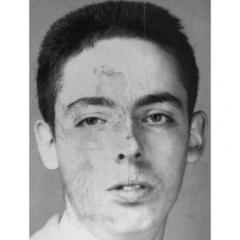
Thomas Pynchon
Thomas Pynchon

Thomas Pynchon is an American novelist born on May 8, 1937. His works are known for their complex narrative structures, rich symbolism, and profound social criticism. His representative works include 'The Crying of Lot 49' and 'Gravity's Rainbow'. more

You May Also Like

“У меня в Москве — купола горят! У меня в Москве — колокола звонят! И гробницы в ряд у меня стоят, — В них царицы спят, и цари. И не знаешь ты, что зарёй в Кремле Легче дышится — чем на всей земле! И не знаешь ты, что зарёй в Кремле Я молюсь тебе — до зари! И проходишь ты над своей Невой О ту пору, как над рекой-Москвой Я стою с опущенной головой, И слипаются фонари. Всей бессонницей я тебя люблю, Всей бессонницей я тебе внемлю — О ту пору, как по всему Кремлю Просыпаются звонари… Но моя река — да с твоей рекой, Но моя рука — да с твоей рукой Не сойдутся, Радость моя, доколь Не догонит заря — зари. 7 мая 1916 At home in Moscow - where the domes are burning, at home in Moscow - in the sound of bells, where I live the tombs - in their rows are standing and in them Tsaritsas - are asleep and tsars. And you don't know how - at dawn the Kremlin is the easiest place to - breathe in the whole wide earth and you don't know when - dawn reaches the Kremlin I pray to you until - the next day comes and I go with you - by your river Neva even while beside - the Moscow river I am standing here - with my head lowered and the line of street lights - sticks fast together. With my insomnia - I love you wholly. With my insomnia - I listen for you, just at the hour throughout - the Kremlin, men who ring the bells - begin to waken, Still my river - and your river still my hand - and your hand will never join, or not until one dawn catches up another dawning.”

“I suppose some things seem obscure, Mister Brown, but really, they're quite obvious, aren't they?' said Mr. Forbes. 'Once they've been pointed out, of course. Either by genius before the fact, or, as is more often the case, after the fact by disaster. Don't you think so?...For instance, Mr. Brown, here's some after-the-fact wisdom, if you like. Taken from the Italian campaign. Taught by disaster.' The smaller force, he said, had of necessity always to be made of men who, though they believed many things, must believe but two. Number one, each soldier must believe that he is engaged in a struggle in which he and his comrades are morally right and their opposition is morally wrong. No middle way. No room to negotiate a compromise. It couldn't be a simple dispute over land. Basic principles, not mere borders, must be at stake. And number two, he must believe that he is fighting for his own life and for the lives of his loved ones. So that the only imaginable alternative to his participating in this dreadful war is death for him and his loved ones. No going home for a season to harvest the olives and the grapes.”

“Semua perang tadi adalah perang demi industri. Bangsa yang tak mengenal perdagangan pula tak mengenal industri, pastilah tak memerlukan perang. Namun bangsa yang memiliki keduanya terpaksa melakukan politik penaklukan. Peningkatan jumlah perang berbanding lurus dengan peningkatan produksi industri. Begitu salah satu dari pabrik kami tidak mampu menjual hasil produksi mereka, diperlukan sebuah perang untuk membantu memberi peluang. Karena itulah pada tahun ini kami memiliki perang batu bara, perang tembaga, dan perang kapas. Kami terpaksa melenyapkan dua per tiga bangsa Selandia Ketiga agar yang tersisa mau membeli produk payung dan produk pakaian kami.”

“Alix looked at Nikola. With a slight movement of his head, he indicated the open doorway, and she got up and followed him outside. They faced each other, hunched against the wind, and he began quietly, ‘If anything should happen to me…’ She met his eyes and saw something different there. This was not his usual self-pitying ploy to engage her sympathy. He really meant this. Her first instinct was to reply, ‘Nothing will happen. You’ve been in dozens of battles and come out safely.’ ‘This could be different,’ he said. ‘I just want you to know, if anything did happen, I have made Dragomir promise to look after you.’ She almost laughed. Dragomir had taken care of her ever since they were forced out of Uzice a year ago. Then she realised what it had cost Nikola to exact that promise. He had been jealous of Drago since they had met in the ruins of Belgrade and he refused to accept that there could be anything between them beyond the relationship of mistress and servant. This was a tacit acceptance that it was much more than that.”

“Certainly there is no hunting like the hunting of man and those who have hunted armed men long enough and liked it, never really care for anything else thereafter. You will meet them doing various things with resolve, but their interest rarely holds because after the other thing ordinary life is as flat as the taste of wine when the taste buds have been burned off your tongue. Wine, when your tongue has been burned clean with lye and water, feels like puddle water in your mouth, while mustard feels like axle-grease, and you can smell crisp, fried bacon, but when you taste it, there is only a feeling of crinkly lard. (from "On The Blue Water", a 1936 essay about fishing)”