Quotessence
Home / Quotes / Quote by Watchman Nee

Quote by Watchman Nee

“The overthrow of Satan is our work. God is trying to end this age. He needs overcomers. If there is no man-child, there will be no way to overthrow Satan's work. Satan has already been judged by redemption; now the punishment must be executed by the kingdom.”

Quote by Watchman Nee

Work

The Glorious Church

Browse quotes and source details for this work. more

Author

Watchman Nee
Watchman Nee

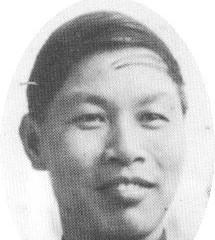
Watchman Nee, born Liu Zhi-ping, was a prominent Chinese Christian author and theologian. He was born on November 4, 1903, and passed away on June 1, 1972. Nee is known for his profound and accessible Christian writings and his unique insights into the Christian life. His works have had a wide-reaching influence both in mainland China and overseas. more

You May Also Like

“Soon I found myself co-leading a small group of people wrestling with their own pain, questions, and disappointments. Even when I felt too bleak to inspire any of them, I knew this was where I needed to be. Because of my rejection I saw and understood the pain of a whole new demographic of people. I had a more profound acceptance of a gray world where things weren’t as black and white as I thought they were. I had much more grace and love for others who hadn’t made the wisest choices in life. No experience is wasted.”

“I believe in a path back. I believe accountability can be a step toward greater wholeness, personally and as a movement. The project of building toward collective liberation is too important and too difficult to permanently cut people out when they make mistakes. We cannot afford it. Simply firing and excluding people who harass is a practice that mirrors the ultimately ineffective approach of the criminal justice system.”

“So many of us have histories of trauma that come from generations of people forced from our land, bent and twisted by patriarchy, slavery, and genocide. If we simply fire those unable to carry those histories, those who perpetuate harmful lessons they were forced to learn, we will lose.”

“Now I realize he lied twice to me yesterday: he knew who my grandmother was. Maybe he had hoped I’d lead him to her. Not to kill her, as Leo had suspected, but for closure. The monster and the girl who could rescue him: obviously, he was reading his life story into her fiction. It was why he had saved her years ago; it was why, now, he needed to know if he would be redeemed or condemned.”

“On train trips, Ernie always wanted the window seat. He knew the names of the trees we passed, and the clouds—nacreous, cumulus, nimbus. He was ever vigilant for animal life and appreciative of the tiny patches of humanity along the tracks that exposed the lives of the rail-side dwellers in such intimate detail. “I love sad houses,” he’d say, pointing to a chorus line of discoloured laundry waving at us, to an upturned self-propelled lawnmower, straggly gardens, leaky drainpipes, a rain-weathered pram that had been turned into a wheelbarrow. “The porch lights are on to keep the rats in their dens,” he’d said. To be a voyeur of decay at such close range was as much of an enthrallment as it was a validation of the scarcities in his own backyard. I knew exactly which days Ernie’s mum had had to choose between heating the house and putting food on the table. My mother had been there too. Before the Zipper had given her a leg up.”

“The leaves of the maples along the highway were beginning to turn red, orange and yellow. Whole cornfields lay bare once again. Summer was drawing to a close. On his way to Bar Harbor, Nick thought his life, too, was drawing to a close. He felt alone and unloved. He wondered if anyone would even miss him. But then he got spun around, and he began to understand that he was neither alone nor unloved. No one had left him or stopped loving him. They were simply waiting for him. Rays of sunlight streamed through gaps in the clouds. They made Nick think of his mother and what she had told him about grace being his salvation. Now, he felt filled with grace. And he chose not to think of his failings or even the exciting opportunities ahead, his past or his future, his exodus or his journey home. Instead, Nick chose to pay attention to the road and simply drive.”