Quotessence
Home / Quotes / Quote by Iris Murdoch

Quote by Iris Murdoch

Work

The Sea, The Sea

This novel is a rich tapestry of interconnected narratives that delve into the complexities of human experience. Set in the early 20th century, it follows the lives of a group of individuals connected to a theater company. The story is characterized by its exploration of themes such as memory, art, and the fleeting nature of time. The author employs a unique narrative structure that intertwines the lives of these characters, creating a deeply moving and introspective work. more
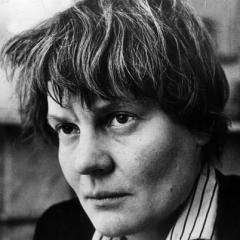
Author

Iris Murdoch
Iris Murdoch

Iris Murdoch was an Irish-Canadian philosopher and author, born on July 15, 1919, in Dublin, Ireland, and passed away on February 8, 1999. She is celebrated for her philosophical novels that intertwine moral and ethical dilemmas with complex narratives. Murdoch's work has left a lasting impact on the literary world, particularly in the latter half of the 20th century. more

You May Also Like

“I should never have made you stay here," he said, his voice dropping to a whisper. "But I could not help myself." Alice took a step toward him. "I know. You are tired of being alone. You told me." "You don't know," he said in a low, almost hostile voice. He shook his head. "I don't even know what I'm doing with you. You're not like anyone else who's in my life-" He stopped abruptly. "Did you ever drink too much wine, Alice?" He held up the glass in his hand and waggled it idly, making the ruby contents swirl. "I'm not one to overindulge." "No, you wouldn't be," he said wryly. "Allow me to explain, then, that the more you drink, the more thirsty you become. Not all the wine in the world can assuage the thirst for water. Water. Wine makes you merry, but a man needs water to keep him alive. Pure, clean, sweet water." He sighed, silent for a moment. He stared almost bitterly into the fire. "I am parched, Alice, scorched like a wasteland, burning like a damned soul in hell. I thirst." "I know," she whispered.”

“To attain success, you must learn to conquer fear, for it is often just an illusion. Learn to ignore fear and do not let it control you. Face it with calmness and discipline. Recognize that true strength originates from self-control. By doing so, you build resilience and move closer to your purpose.”

“Many religions now come before us with ingratiating smirks and outspread hands, like an unctuous merchant in a bazaar. They offer consolation and solidarity and uplift, competing as they do in a marketplace. But we have a right to remember how barbarically they behaved when they were strong and were making an offer that people could not refuse. And if we chance to forget what that must have been like, we have only to look at those states and societies where the clergy still has the power to dictate its own terms. The pathetic vestiges of this can still be seen, in modern societies, in the efforts made by religion to secure control over education, or to exempt itself from tax, or to pass laws forbidding people to insult its omnipotent and omniscient deity, or even his prophet.”