Quotessence
Home / Quotes / Quote by John Ruskin

Quote by John Ruskin

“I believe, then, that the characteristic or moral elements of Gothic are the following, placed in the order of their importance: 1. Savageness. 2. Changefulness. 3. Naturalism. 4. Grotesqueness. 5. Rigidity. 6. Redundance. These characters are here expressed as belonging to the building; as belonging to the builder, they would be expressed thus: - 1. Savageness or Rudeness. 2. Love of Change. 3. Love of Nature. 4. Disturbed Imagination. 5. Obstinacy. 6. Generosity. And I repeat, that the withdrawal of any one, or any two, will not at once destroy the Gothic character of a building, but the removal of a majority of them will. I shall proceed to examine them in their order.”

Quote by John Ruskin

Work

On Art and Life

Browse quotes and source details for this work. more

Author

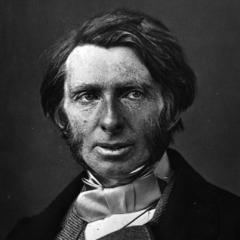
John Ruskin
John Ruskin

John Ruskin was an influential British art critic, writer, and social critic. Known for his profound insights into art, architecture, and social issues, he had a significant impact on the aesthetics and culture of the Victorian era. more

You May Also Like

“Thank you Heavenly Father. You heard my petition. You have answered my plea. May your name be glorified and be praised.”

“Magritte’s variations on the same theme invite us to rethink conventional notions of originality, to look more carefully at the details and contrasts between different versions of the painting: we observe the architectural variations of the Belgian houses, the varieties of trees in the foreground, of the streetlamps and their shadows, and of the skyscapes. Some of these paintings are in portrait format, others in landscape; some, like the 1961 version, give the viewer a deeper sense of proximity to, or immersion in, the scene while in others the depicted world is more distant. Together, these variant paintings form an internal system of poetic rhythms and patterns in which cross-references abound, alongside allusions to older Belgian art, most notably La Maison rose (1892) by the symbolist William Degouve de Nuncques.”

“So, like so many artists before me, my comrades-in-arms, Rembrandt, Rubens, da Vinci, Caravaggio, Michelangelo, anyone who willingly put themselves through this same ordeal, I purchased everything I needed and began hauling my canvases, easel, and paints all over the large metropolis of Vienna every day. I searched for my voice, my signature, what made my paintings inherently and unmistakably mine.”

“AH: A great artist is imperative to society, doctor, because that person decides to pursue the uncertain future of an artist for no other reason than to create art and improve life for everybody. Art is self-determining and undemocratic. It’s a meritocracy. And anyone with any sense at all understands that art is the soothing slave on the irritating wound that is life. DR: Did you just make that up? AH: Yes. DR. That’s very good.”

“Die Kunst kann mit den ihr genuinen Mitteln zwei komplementäre Erkenntnisbewegungen zum Klimadiskurs beitragen: Sie kann die scheinbare Selbstgenügsamkeit eines Ichs aufbrechen, das sich unbetroffen fühlt, weil es seine grundsätzliche Verbundenheit leugnet, und sie kann den (nichtpekuniären) Wert der verschwindenden Lebensräume, der verschwindenden Arten vor Augen führen. "Die Welt muß romantisiert werden": Ich möchte diese Formel wieder als Forderung der Aufklärung verstehen, also als Forderung der Vernunft, die Fragilität und Einzigartigkeit lebender Wesen wahrzunehmen und ihnen mit Freundlichkeit und Respekt zu begegnen.”