Quotessence
Home / Quotes / Quote by George Eliot

Quote by George Eliot

“Dorothea, with all her eagerness to know the truths of life, retained very childlike ideas about marriage. She felt sure that she would have accepted the judicious Hooker, if she had been born in time to save him from that wretched mistake he made in matrimony; or John Milton when his blindness had come on; or any of the other great men whose odd habits it would have been glorious piety to endure; but an amiable handsome baronet, who said "Exactly" to her remarks even when she expressed uncertainty,--how could he affect her as a lover? The really delightful marriage must be that where your husband was a sort of father, and could teach you even Hebrew, if you wished it.”

Quote by George Eliot

Work

Middlemarch

George Eliot's 'Middlemarch' is a comprehensive portrayal of English provincial life in the 1830s. The story follows a diverse cast of characters, including Dorothea Brooke, Tertius Lydgate, and Casaubon, as they navigate personal and societal challenges. The novel delves into themes of ambition, marriage, and the pursuit of knowledge, offering a rich tapestry of human experience. more

Author

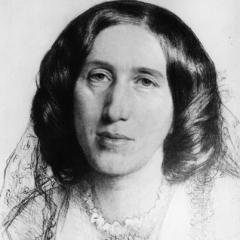
George Eliot
George Eliot

George Eliot, born Mary Ann Evans, was a renowned 19th-century British novelist. Her works are known for their profound psychological insights and critical exploration of social issues. With her unique narrative techniques and rich emotional expression, she has had a profound impact on literature. more

You May Also Like

“Nick and I, we sometimes laugh, laugh out loud, at the horrible things women make their husbands do to prove their love. The pointless tasks, the myriad sacrifices, the endless small surrenders. We call these men the dancing monkeys. Nick will come home, sweaty and salty and beer-loose from a day at the ballpark,and I’ll curl up in his lap, ask him about the game, ask him if his friend Jack had a good time, and he’ll say, ‘Oh, he came down with a case of the dancing monkeys – poor Jennifer was having a “real stressful week” and really needed him at home.’ Or his buddy at work, who can’t go out for drinks because his girlfriend really needs him to stop by some bistro where she is having dinner with a friend from out of town. So they can finally meet. And so she can show how obedient her monkey is: He comes when I call, and look how well groomed! Wear this, don’t wear that. Do this chore now and do this chore when you get a chance and by that I mean now. And definitely, definitely, give up the things you love for me, so I will have proof that you love me best. It’s the female pissing contest – as we swan around our book clubs and our cocktail hours, there are few things women love more than being able to detail the sacrifices our men make for us. A call-and-response, the response being: ‘Ohhh, that’s so sweet.’ I am happy not to be in that club. I don’t partake, I don’t get off on emotional coercion, on forcing Nick to play some happy-hubby role – the shrugging, cheerful, dutiful taking out the trash, honey! role. Every wife’s dream man, the counterpoint to every man’s fantasy of the sweet, hot, laid-back woman who loves sex and a stiff drink. I like to think I am confident and secure and mature enough to know Nick loves me without him constantly proving it. I don’t need pathetic dancing-monkey scenarios to repeat to my friends, I am content with letting him be himself. I don’t know why women find that so hard.”

“Tired as I was of conflict, I felt that I must not shrink from the fight, nor abandon in cowardice the attempt to prove, as no theories could ever satisfactorily prove without examples, that marriage and motherhood need never tame the mind, nor swamp and undermine ability and training, nor trammel and domesticise political perception and social judgement. Today, as never before, it was urgent for individual women to show that life was enriched, mentally and spiritually as well as physically and socially, by marriage and children; that these experiences rendered the woman who accepted them the more and not the less able to take the world's pulse, to estimate its tendencies, to play some definite, hard-headed, hard-working part in furthering the constructive ends of a political civilisation”

“The first three years of our marriage were miserable. Until I got a divorce. A divorce from loving myself and seeking my own way. I was reading the book of Galatians one night when I stumbled on the verse, "I no longer live, but Christ lives in me" (2:20), and the most profound thought hit me: If I am dead, and Christ lives in me, can my wife see Him there? Finding the right person, I have since discovered, is less important than being the right person. The happiest married people I know discovered early on that the "better" comes after the "worse".”