Quotessence
Home / Quotes / Quote by Wilhelm Reich

Quote by Wilhelm Reich

“I can imagine no greater catastrophe than if I were mistaken, and the theory were correct that what I consider secondary instincts or drives are actually primary instincts! Because in that case the emotional plague would rest upon the support of a natural law while its archenemies, truth and sociality, would be relying upon unfounded ethics. Until now both lies and truth have taken recourse to ethics. But only lies have profited because they were able to appear under the guise of truth. Under these circumstances, egoism, theft, petty selfishness, slander, etc., would be the natural rule. (26.july.1943)”

Quote by Wilhelm Reich

Work

American Odyssey: Letters & Journals, 1940-1947

Browse quotes and source details for this work. more

Author
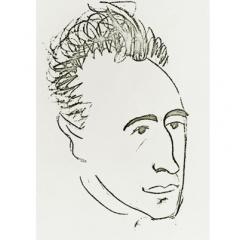
Wilhelm Reich
Wilhelm Reich

Wilhelm Reich was a prominent psychoanalyst, born on March 24, 1897, and died on November 3, 1957. He made significant contributions to the field of psychoanalysis, particularly in the areas of sexual psychology and orgonomy. more

You May Also Like

“In times of crisis, you get a public reaction that is incoherence on stilts. On the one hand, most people know that the government is not in the oil business. They don't want it in the oil business. They know there is nothing a man in Washington can do to plug a hole a mile down in the gulf. On the other hand, they demand that the president 'take control.' They demand that he hold press conferences, show leadership, announce that the buck stops here and do something. They want him to emote and perform the proper theatrical gestures so they can see their emotions enacted on the public stage. They want to hold him responsible for things they know he doesn't control. Their reaction is a mixture of disgust, anger, longing and need. It may not make sense. But it doesn't make sense that the country wants spending cuts and doesn't want cuts, wants change and doesn't want change.”

“... as a convention, you get up and walk to the window to make the audience believe that you're looking out. It's for the audience, not for you! And what it means to you is something emotional [...] If you went to the Actors Studio you'd spend six months seeing the snow before you could say, 'Look at the snow.' This takes a terrible burden away from the actor, who thinks he's got to see the woods and the snow. 'Give me my gun! I see a rabbit! Give me my gun!' " Meisner sounds thrilled at the possibility of a hunt. "That happens when you're still sitting there reading. Then when they put in the scenery you move to the window. Isn't that simple? How simple it is to solve the problem of seeing things when you know that it's all in you emotionally, and that walking to the window is only a convention.”

“Rosy lifted her arm, tried to say something, then pointed at the cafe, held her head, covered her mouth and—humiliation of humiliations—she began to cry. Right there in the street. “I’m so confused,” she said but it came out as a great honking wail. “Come here, you silly girl,” Phyllis said. The woman put her arms around Rosy, patted her back, and for the first time in forever, Rosy allowed herself to just cry. A young mother with twins in a pram passed them. The children’s eyes tracked Rosy for a second before their faces crumpled and they started to cry too. “I’m sorry,” Rosy said, and flapped her arms. “I’m sorry.”

“All of the virtues depend upon truth, and truth depends upon them all. Final truth in this world is unattainable, but its pursuit leads the individual away from unfreedom. The temptation to believe what feels right assails us at all times from all directions. Authoritarianism begins when we can no longer tell the difference between the true and the appealing. At the same time, the cynic who decides that there is no truth at all is the citizen who welcomes the tyrant. Total doubt about all authority is naïveté about the particular authority that reads emotions and breeds cynicism. To seek the truth means finding a way between conformity and complacency, towards individuality.”

“Many scientists have tried to make determinism and complementarity the basis of conclusions that seem to me weak and dangerous; for instance, they have used Heisenberg's uncertainty principle to bolster up human free will, though his principle, which applies exclusively to the behavior of electrons and is the direct result of microphysical measurement techniques, has nothing to do with human freedom of choice. It is far safer and wiser that the physicist remain on the solid ground of theoretical physics itself and eschew the shifting sands of philosophic extrapolations.”