Quotessence
Home / Quotes / Quote by Sanford Meisner

Quote by Sanford Meisner

“... as a convention, you get up and walk to the window to make the audience believe that you're looking out. It's for the audience, not for you! And what it means to you is something emotional [...] If you went to the Actors Studio you'd spend six months seeing the snow before you could say, 'Look at the snow.' This takes a terrible burden away from the actor, who thinks he's got to see the woods and the snow. 'Give me my gun! I see a rabbit! Give me my gun!' " Meisner sounds thrilled at the possibility of a hunt. "That happens when you're still sitting there reading. Then when they put in the scenery you move to the window. Isn't that simple? How simple it is to solve the problem of seeing things when you know that it's all in you emotionally, and that walking to the window is only a convention.”

Quote by Sanford Meisner

Work

Sanford Meisner on Acting

This book delves into the principles and exercises of the Meisner technique, offering insights into how actors can achieve a natural and authentic portrayal of characters. It includes anecdotes and exercises from Meisner's own teaching, providing a unique perspective on the development of this influential acting approach. more

Author
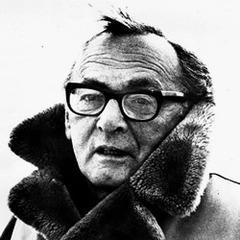
Sanford Meisner
Sanford Meisner

Sanford Meisner (August 31, 1905 – February 2, 1997) was an American actor and drama educator, best known for developing the Meisner Acting Technique. He was a key figure in the American Method acting movement, alongside Lee Strasberg and Stella Adler. Meisner emphasized spontaneous, truthful reactions in performance, using exercises like the 'repetition exercise' to train actors to respond authentically in the moment. He taught for decades at the Neighborhood Playhouse in New York City, influencing generations of actors, including Robert Duvall, Diane Keaton, and Gregory Peck. His approach remains a cornerstone of modern acting education worldwide. more

You May Also Like

“Rosy lifted her arm, tried to say something, then pointed at the cafe, held her head, covered her mouth and—humiliation of humiliations—she began to cry. Right there in the street. “I’m so confused,” she said but it came out as a great honking wail. “Come here, you silly girl,” Phyllis said. The woman put her arms around Rosy, patted her back, and for the first time in forever, Rosy allowed herself to just cry. A young mother with twins in a pram passed them. The children’s eyes tracked Rosy for a second before their faces crumpled and they started to cry too. “I’m sorry,” Rosy said, and flapped her arms. “I’m sorry.”

“All of the virtues depend upon truth, and truth depends upon them all. Final truth in this world is unattainable, but its pursuit leads the individual away from unfreedom. The temptation to believe what feels right assails us at all times from all directions. Authoritarianism begins when we can no longer tell the difference between the true and the appealing. At the same time, the cynic who decides that there is no truth at all is the citizen who welcomes the tyrant. Total doubt about all authority is naïveté about the particular authority that reads emotions and breeds cynicism. To seek the truth means finding a way between conformity and complacency, towards individuality.”

“Many scientists have tried to make determinism and complementarity the basis of conclusions that seem to me weak and dangerous; for instance, they have used Heisenberg's uncertainty principle to bolster up human free will, though his principle, which applies exclusively to the behavior of electrons and is the direct result of microphysical measurement techniques, has nothing to do with human freedom of choice. It is far safer and wiser that the physicist remain on the solid ground of theoretical physics itself and eschew the shifting sands of philosophic extrapolations.”

“From the end of the World War twenty-one years ago, this country, like many others, went through a phase of having large groups of people carried away by some emotion--some alluring, attractive, even speciously inspiring, public presentation of a nostrum, a cure-all. Many Americans lost their heads because several plausible fellows lost theirs in expounding schemes to end barbarity, to give weekly handouts to people, to give everybody a better job--or, more modestly, for example, to put a chicken or two in every pot--all by adoption of some new financial plan or some new social system. And all of them burst like bubbles. Some proponents of nostrums were honest and sincere, others--too many of them--were seekers of personal power; still others saw a chance to get rich on the dimes and quarters of the poorer people in our population. All of them, perhaps unconsciously, were capitalizing on the fact that the democratic form of Government works slowly. There always exists in a democratic society a large group which, quite naturally, champs at the bit over the slowness of democracy; and that is why it is right for us who believe in democracy to keep the democratic processes progressive--in other words, moving forward with the advances in civilization. That is why it is dangerous for democracy to stop moving forward because any period of stagnation increases the numbers of those who demand action and action now.”