Quotessence
Home / Quotes / Quote by Yevgeny Zamyatin

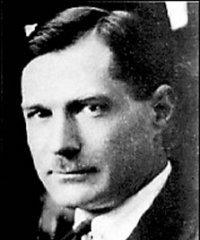
Quote by Yevgeny Zamyatin

“I looked silently at her lips. All women are lips, all lips. Some are pink and firmly round: a ring, a tender guardrail from the whole world. And then there are these ones: a second ago they weren’t here, and just now — like a knife-slit — they are here, still dripping sweet blood.”

Quote by Yevgeny Zamyatin

Book:We

Work

We

This book delves into the complexities of group dynamics and the human condition, examining how individuals come together to form a collective identity. more

Author

Yevgeny Zamyatin
Yevgeny Zamyatin

Russian author known for his dystopian novel 'We'. Born on February 1, 1884, in Taganrog, Russia, he passed away on March 10, 1937. more

You May Also Like

“She had been struck by the figure of a woman's back in a mirror. She stopped and looked. The dress the figure wore was the color called ashes of roses, and Ada stood, held in place by a sharp stitch of envy or th woman's dress and the fine shape of her back and her thick dark hair and the sense of assurance she seemed to evidence in her very posture. Then Ada took a step forward, and the other woman did too, and Ada realized that it was herself she was admiring, the mirror having caught the reflection of an opposite mirror on the wall behind her. The light of the lamps and the tint of the mirrors had conspired to shift colors, bleaching mauve to rose. She climbed the steps to her room and prepared for bed, but she slept poorly that night, for the music went on until dawn. As she lay awake she thought how odd it had felt to win her own endorsement.”

“It’s genius simmering, perhaps. I’ll let it simmer, and see what comes of it,” he said, with a secret suspicion all the while that it wasn’t genius, but something far more common. Whatever it was, it simmered to some purpose, for he grew more and more discontented with his desultory life, began to long for some real and earnest work to go at, soul and body, and finally came to the wise conclusion that everyone who loved music was not a composer.”

“What did we talk about? I don't remember. We talked so hard and sat so still that I got cramps in my knee. We had too many cups of tea and then didn't want to leave the table to go to the bathroom because we didn't want to stop talking. You will think we talked of revolution but we didn't. Nor did we talk of our own souls. Nor of sewing. Nor of babies. Nor of departmental intrigue. It was political if by politics you mean the laboratory talk that characters in bad movies are perpetually trying to convey (unsuccessfully) when they Wrinkle Their Wee Brows and say (valiantly--dutifully--after all, they didn't write it) "But, Doctor, doesn't that violate Finagle's Constant?" I staggered to the bathroom, released floods of tea, and returned to the kitchen to talk. It was professional talk. It left my grey-faced and with such concentration that I began to develop a headache. We talked about Mary Ann Evans' loss of faith, about Emily Brontë's isolation, about Charlotte Brontë's blinding cloud, about the split in Virginia Woolf's head and the split in her economic condition. We talked about Lady Murasaki, who wrote in a form that no respectable man would touch, Hroswit, a little name whose plays "may perhaps amuse myself," Miss Austen, who had no more expression in society than a firescreen or a poker. They did not all write letters, write memoirs, or go on the stage. Sappho--only an ambiguous, somewhat disagreeable name. Corinna? The teacher of Pindar. Olive Schriener, growing up on the veldt, wrote on book, married happily, and ever wrote another. Kate Chopin wrote a scandalous book and never wrote another. (Jean has written nothing.). There was M-ry Sh-ll-y who wrote you know what and Ch-rl-tt- P-rk-ns G-lm-an, who wrote one superb horror study and lots of sludge (was it sludge?) and Ph-ll-s Wh--tl-y who was black and wrote eighteenth century odes (but it was the eighteenth century) and Mrs. -nn R-dcl-ff- S-thw-rth and Mrs. G--rg- Sh-ld-n and (Miss?) G--rg-tt- H-y-r and B-rb-r- C-rtl-nd and the legion of those, who writing, write not, like the dead Miss B--l-y of the poem who was seduced into bad practices (fudging her endings) and hanged herself in her garter. The sun was going down. I was blind and stiff. It's at this point that the computer (which has run amok and eaten Los Angeles) is defeated by some scientifically transcendent version of pulling the plug; the furniture stood around unknowing (though we had just pulled out the plug) and Lady, who got restless when people talked at suck length because she couldn't understand it, stuck her head out from under the couch, looking for things to herd. We had talked for six hours, from one in the afternoon until seven; I had at that moment an impression of our act of creation so strong, so sharp, so extraordinarily vivid, that I could not believe all our talking hadn't led to something more tangible--mightn't you expect at least a little blue pyramid sitting in the middle of the floor?”

“After breakfast I spent an hour cleaning my revolver and trying my skill at a target. Jane shook her head, probably thinking that bullets were vain against demonic powers. But Perdita was hugely delighted with the shining little instrument and wanted it for a plaything; women of all ages will play with death! ("Absolute Evil")”