“As a political leader, Xenophon was forced to adapt himself to this situation and to induce those he led to do so. Among the most impressive passages in the Anabasis are the speeches in which he instructs his fellow Greeks on the necessity of compliance with certain Spartan demands that are far from just or reasonable and, in general, on the necessity of accommodating themselves to “those who now rule Greece.” [123] Readers who are at all sensitive to how harsh political necessity can occasionally be may also find in Xenophon the writer, in his treatment of the Spartans, a model of how to proceed under like circumstances. He applauded and thus encouraged what was good, while pointing out without rancor or bitterness what was bad, to the extent that it was prudent and useful to do so. To return to what distinguished him from the elder and younger Cyruses, the high qualities which in the case of the two Persians (that is, barbarians) could be prevented from doing political harm only by being suppressed, or excised from the soul, could safely thrive in Xenophon, who had had the benefit of a Socratic education, an education that those qualities among others fitted him to receive. [123] Anabasis VI 6.8–16 and VII 1.25–31; compare III 2.37 and VI 1.26–28.”
Quote by Leo Strauss
Work
History of Political Philosophy
Browse quotes and source details for this work. more
Author
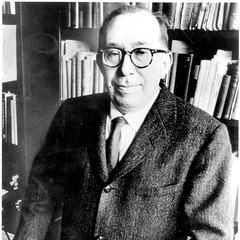
Leo Strauss
Leo Strauss was a prominent philosopher born on September 20, 1899, and died on October 18, 1973. His thoughts were deeply influenced by classical philosophy and German philosophy, especially by Martin Heidegger's philosophical ideas. Strauss's main contribution lies in his reinterpretation of political philosophy, emphasizing the close connection between political philosophy and moral philosophy. more
You May Also Like
Source: History of Political Philosophy
“At Cunaxa, the Greek phalanx proved invincible in battle, yet the death of Cyrus decided the war.”
Source: The Battle of Cunaxa, 401 B.C.
“I don't consider myself to be definite, but in waiting position and eventual appearance”
Source: Gros-Câlin
“Много ясно си спомням този миг от живота си, понеже беше досущ като останалите.”
Source: La Vie devant soi
Source: زندگی در پیش رو
Source: پرندگان میروند در پرو میمیرند
Source: La Vie devant soi
Source: پرندگان میروند در پرو میمیرند