“But whereas Cyrus wanted his praises to be sung by all human beings, Xenophon was concerned primarily with honor from his friends.[125] Unlike Cyrus, he was not as eager for praise from incompetent judges as from competent ones. This difference helps us to understand his equanimity in the face of the most varied political fortunes: for example, the dignity and wit with which he defended himself when confronted with ingratitude and baseless hostility on the part of the very men whose lives he had saved.[126] It helps us also to understand his ability to leave political life to return to a private life. [...] Country retirement, while lacking the immediate challenges to heart and mind presented by politics at their peak, would have appealed to him as allowing more leisure for contemplation and writing—especially since that contemplation might embrace, as we know from the Anabasis that it did, his own political experiences among other things. For a man like Xenophon, the contemplative reliving of experiences was sure to be a deepening of them. It could thus have been looked forward to as promising a more profound enjoyment than the original experiences themselves, and one less mixed with pain. [125]Cyropaedia III 2.31; Anabasis VI 1.20. 126. [126]Anabasis VII 6.11 ff.; compare V 7.5 ff. and 8.2 ff.”
Quote by Leo Strauss
Work
History of Political Philosophy
Browse quotes and source details for this work. more
Author
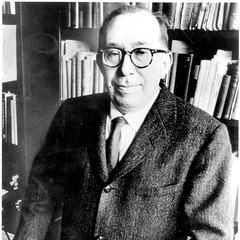
Leo Strauss
Leo Strauss was a prominent philosopher born on September 20, 1899, and died on October 18, 1973. His thoughts were deeply influenced by classical philosophy and German philosophy, especially by Martin Heidegger's philosophical ideas. Strauss's main contribution lies in his reinterpretation of political philosophy, emphasizing the close connection between political philosophy and moral philosophy. more
You May Also Like
“At Cunaxa, the Greek phalanx proved invincible in battle, yet the death of Cyrus decided the war.”
Source: The Battle of Cunaxa, 401 B.C.
“I don't consider myself to be definite, but in waiting position and eventual appearance”
Source: Gros-Câlin
“Много ясно си спомням този миг от живота си, понеже беше досущ като останалите.”
Source: La Vie devant soi
Source: زندگی در پیش رو
Source: پرندگان میروند در پرو میمیرند
Source: La Vie devant soi
Source: پرندگان میروند در پرو میمیرند
Source: Lady L