Quotessence
Home / Quotes / Quote by Brian Greene

Quote by Brian Greene

“Es ist ungeheuer viel wahrscheinlicher, dass alles, was wir jetzt im Universum erblicken, aus einer seltenen, aber gelegentlich zu erwartenden Abweichung der totalen Unordnung erwuchs, als dass es sich langsam aus dem noch unwahrscheinlicheren, unglaublich stärker geordneten, erstaunlich niederentropischen Ausgangspunkt entwickelte, den der Urknall voraussetzt.”

Quote by Brian Greene

Work

The Fabric of the Cosmos: Space, Time, and the Texture of Reality

This book delves into the complex and fascinating concepts of space, time, and the underlying structure of the universe. It examines the scientific theories and discoveries that have shaped our understanding of these fundamental aspects of reality. more

Author
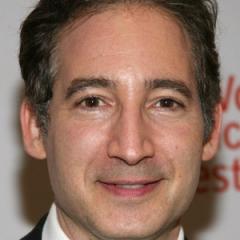
Brian Greene
Brian Greene

Brian Greene is a renowned theoretical physicist and bestselling author known for making complex scientific concepts accessible to the public. Born on February 9, 1963 in New York City, he serves as a professor of physics and mathematics at Columbia University. His research focuses on string theory, M-theory, and cosmology. Greene has written several acclaimed popular science books, including "The Elegant Universe," "The Fabric of the Cosmos," and "The Hidden Reality," which have been translated into over 40 languages. He has also produced and hosted PBS documentary series, bringing cutting-edge physics to mainstream audiences and inspiring millions worldwide. more

You May Also Like

“However, very little thought, or for that matter, information, is given as to how Allah veils His Truths. One way that the Truth is veiled is through the veil of: the fear of appearing or becoming insane or “crazy.” Other veils include: becoming or appearing a fool, the veil of obviousness, the veil of shame, the veil of no longer being concerned with “stations” on the path, the veil of behaving contrary to Shariah, the veil of heresy, and the veil of leaving the Path.”

“Our parents never structured our studies. "Let 'em learn what they like," my father used to say. "A child will eat a well-balanced diet if she's given a choice of wholesome foods and left alone. If a kid's body knows what it needs to grow and stay healthy, why wouldn't her mind, too?" To his friends he explained, "My girls have free run of the forest and public library. They have a mother who is around to fix them lunch and define any words don't know. School would only get in the way of that. Besides, if they went to school, they'd spend over two hours a day in the car. Lord knows I could use the company on those drives, but it's better for my kids to stay in the woods." So while other children were reciting their times tables and asking permission to get drinks of water, Eva and I were free to roam and learn as we pleased. Together we painted murals and made up plays, built forts, raised butterflies, and designed computer games. We made paper, concocted new recipes for cookies, edited newsletters, and caught minnows. We grew gourds and nursed fledglings and played with prisms, and our parents told the state that what we did was school. For years I studied what I wanted to, when and how I wanted to study it. One book led to another in a random pattern, meandering from interest to interest like a good conversation, and the only thing that connected them was their juxtaposition on the bookshelves in mother's workroom.”

“The simplest description is that Unschooling means a way of bringing up children using free play and child-directed activity to develop the child's own individual talents and creativity by supportively following up the child's own interests – without coercion, compulsion, manipulation, regimentation, constant testing and grading and rank-ordering, or top-down authoritarianism.”

“Even if we have a reliable criterion for detecting design, and even if that criterion tells us that biological systems are designed, it seems that determining a biological system to be designed is akin to shrugging our shoulders and saying God did it. The fear is that admitting design as an explanation will stifle scientific inquiry, that scientists will stop investigating difficult problems because they have a sufficient explanation already. But design is not a science stopper. Indeed, design can foster inquiry where traditional evolutionary approaches obstruct it. Consider the term "junk DNA." Implicit in this term is the view that because the genome of an organism has been cobbled together through a long, undirected evolutionary process, the genome is a patchwork of which only limited portions are essential to the organism. Thus on an evolutionary view we expect a lot of useless DNA. If, on the other hand, organisms are designed, we expect DNA, as much as possible, to exhibit function. And indeed, the most recent findings suggest that designating DNA as "junk" merely cloaks our current lack of knowledge about function. For instance, in a recent issue of the Journal of Theoretical Biology, John Bodnar describes how "non-coding DNA in eukaryotic genomes encodes a language which programs organismal growth and development." Design encourages scientists to look for function where evolution discourages it. Or consider vestigial organs that later are found to have a function after all. Evolutionary biology texts often cite the human coccyx as a "vestigial structure" that hearkens back to vertebrate ancestors with tails. Yet if one looks at a recent edition of Gray’s Anatomy, one finds that the coccyx is a crucial point of contact with muscles that attach to the pelvic floor. The phrase "vestigial structure" often merely cloaks our current lack of knowledge about function. The human appendix, formerly thought to be vestigial, is now known to be a functioning component of the immune system.”