Quotessence
Home / Quotes / Quote by Peter Matthiessen

Quote by Peter Matthiessen

“It is as if I have entered what the Tibetans call the Bardo-literally, between-two-existences- a dreamlike hallucination that precedes reincarnation, not necessarily in human form…In case I should need them, instructions for passage through the Bardo are contained in the Tibetan book of the dead- a guide for the living since it teaches that a man’s last thoughts will determine the quality of his reincarnation.”

Quote by Peter Matthiessen

Work

The Snow Leopard

The book combines adventure, natural history, and spiritual reflection as the author treks through remote mountainous regions, encountering diverse wildlife and local cultures. more

Author

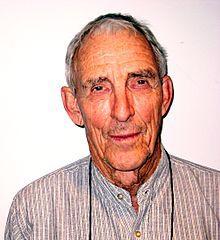
Peter Matthiessen
Peter Matthiessen

Peter Matthiessen was an American novelist and naturalist, renowned for his works that seamlessly integrate fiction and non-fiction. His writing frequently delved into environmental themes and the human connection with nature. Born on May 22, 1927, he passed away on April 5, 2014. more

You May Also Like

“Zen is a journey of exploration and a way of living that, in and of itself, does not belong to any one religion or tradition. It is about experiencing life in the here and now and about removing the dualistic distinctions between "I" and "you" between "subject" and "objective", between our spiritual and our ordinary, everyday activities.”

“Learning how to think' really means learning how to exercise some control over how & what you think. It means being conscious & aware enough to choose what you pay attention to & to choose how you construct meaning from experience.”

“We will be entering the beautiful world of a Zen master's no-mind. Sosan is the third Zen Patriarch. Nothing much is known about him- this is as it should be, because history records only violence. History does not record silence- it cannot record it. All records are of disturbance. Whenever someone becomes really silent, he disappears from all records, he is no more a part of our madness. So it is as it should be. Ch. 1: The Great Way Is Not Difficult”

“What is personal death? Asking this question and pausing to look inward - isn't personal death a concept? Isn't there a thought-and-picture series going on in the brain? These scenes of personal ending take place solely in the imagination, and yet they trigger great mental ad physical distress - thinking of one's cherished attachments an their sudden, irreversible termination. Similarly, if there is 'pain when I let some of the beauty of life in' - isn't this pain the result of thinking, 'I won't be here any longer to enjoy this beauty?' Or, 'No one will be around and no beauty left to be enjoyed if there is total nuclear devastation.' Apart from the horrendous tragedy of human warfare - why is there this fear of 'me' not continuing? Is it because I don't realize that all my fear and trembling is for an image? Because I really believe that this image is myself? In the midst of this vast, unfathomable, ever-changing, dying, and renewing flow of life, the human brain is ceaselessly engaged in trying to fix for itself a state of permanency and certainty. Having the capacity to think and form pictures of ourselves, to remember them and become deeply attached to them, we take this world of pictures and ideas for real. We thoroughly believe in the reality of the picture story of our personal life. We are totally identified with it and want it to go on forever. The idea of "forever" is itself an invention of the human brain. Forever is a dream. Questioning beyond all thoughts, images, memories, and beliefs, questioning profoundly into the utter darkness of not-knowing, the realization may suddenly dawn that one is nothing at all - nothing - that all one has been holding on to are pictures and dreams. Being nothing is being everything. It is wholeness. Compassion. It is the ending of separation, fear, and sorrow. Is there pain when no one is there to hold on? There is beauty where there is no "me".”