Quotessence
Home / Quotes / Quote by Leo Tolstoy

Quote by Leo Tolstoy

“Before and after the funeral I never ceased to cry and be miserable, but it makes me ashamed when I think back on that sadness of mine, seeing that always in it was an element of self-love - now a desire to show that I prayed more than any one else, now concern about the impression I was producing on others, now an aimless curiosity which caused me to observe Mimi's cap or the faces of those around me. I despised myself for not experiencing sorrow to the exclusion of everything else, and I tried to conceal all other feelings: this made my grief insincere and unnatural. Moreover, I felt a kind of enjoyment in knowing that I was unhappy and I tried to stimulate my sense of unhappiness, and this interest in myself did more than anything else to stifle real sorrow in me.”

Quote by Leo Tolstoy

Work

Childhood, Boyhood, Youth

Browse quotes and source details for this work. more

Author
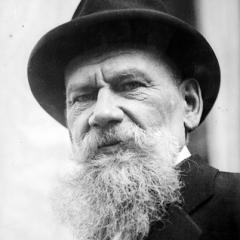
Leo Tolstoy
Leo Tolstoy

Leo Tolstoy was a Russian writer and thinker, a prominent representative of 19th-century Russian literature. His works deeply revealed social contradictions and human nature, and had a profound impact on the world. more

You May Also Like

“Snow is...a beautiful reminder of life and all its quirks. It makes me pause. Think. Stay still. Even my mind takes the hint. It makes me feel giddy. Like a kid. I bring my hot cocoa to the window and simply sit and reminisce...It brings me back to days of school cancellations and snow igloos and King of the Mountain games in my childhood neighborhood...That for this one moment in time, I’m not an adult with all the headaches that can accompany that responsibility, but instead, I’m still the girl in pigtails with the handmade hat and mittens, just waiting to build her next snowman.”

“Yes, it was real hatred - not the hatred we only read about in novels, which I do not believe in, hatred that is supposed to find satisfaction in doing some one harm - but the hatred that fills you with overpowering aversion for a person who, however, deserves your respect, yet whose hair, his neck, the way he walks, the sound of his voice, his whole person, his every gesture are repulsive to you, and at the same time some unaccountable force draws you to him and compels you to follow his slightest acts with uneasy attention.”

“There are moments when the future looks so black that one is afraid to let one's thoughts dwell on it, refuses to let one's mind function and tries to convince oneself that the future will not be, and the past has not been. At such moments, when the will is not governed or modified by reflection and the only incentives that remain in life are our physical instincts, I can understand how a child, being particularly prone owing to lack of experience to fall into such a state, may without the least hesitation or fear, with a smile of curiosity deliberately set fire to his own house - and then fan the flames where is brothers, his father an his mother, all of who he loves dearly, are sleeping.”

“Adolescence--the time when teens begin to do things adults do--now happens later. Thirteen-year-olds--and even 18-year-olds-- are less likely to act like adults and spend their time like adults. They are more likely, instead, to act like children--not by being immature, necessarily, but by postponing the usual activities of adults. Adolescence is now an extension of childhood rather than the beginning of adulthood.”

“For the first time I envisaged the idea that we - that is, our family - were not the only people in the world, that not every conceivable interest was centered in ourselves but that there existed another life - that of people who had nothing in common with us, cared nothing for us, had no idea of our existence even. I must have known all this before but I had not known it as I did now - I had not realized it; I had not felt it.”