“There are moments when the future looks so black that one is afraid to let one's thoughts dwell on it, refuses to let one's mind function and tries to convince oneself that the future will not be, and the past has not been. At such moments, when the will is not governed or modified by reflection and the only incentives that remain in life are our physical instincts, I can understand how a child, being particularly prone owing to lack of experience to fall into such a state, may without the least hesitation or fear, with a smile of curiosity deliberately set fire to his own house - and then fan the flames where is brothers, his father an his mother, all of who he loves dearly, are sleeping.”
Quote by Leo Tolstoy
Work
Childhood, Boyhood, Youth
Browse quotes and source details for this work. more
Author
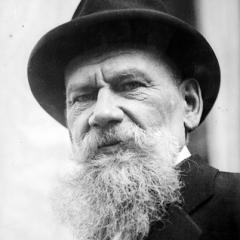
Leo Tolstoy
Leo Tolstoy was a Russian writer and thinker, a prominent representative of 19th-century Russian literature. His works deeply revealed social contradictions and human nature, and had a profound impact on the world. more
You May Also Like
“My name had lost its ring of familiarity and I had to be nudged to go and receive my diploma.”
Source: I Know Why the Caged Bird Sings
Source: Hiddensee
Source: Childhood, Boyhood, Youth
Source: iGen: Why Today’s Super-Connected Kids Are Growing Up Less Rebellious, More Tolerant, Less Happy--and Completely Unprepared for Adulthood--and What That Means for the Rest of Us
Source: Childhood, Boyhood, Youth
“The proof of the pudding is in the Cosmic Ordering.”
Source: Cosmic Ordering: You can be successful
Source: Childhood, Boyhood, Youth
Source: I Know Why the Caged Bird Sings
Source: A Portrait of the Artist as a Young Man