Quotessence
Home / Quotes / Quote by John Howard Griffin

Quote by John Howard Griffin

“I learned a strange thing... that in a jumble of unintelligible talk, the word "nigger" leaps out with electric clarity. You always hear it and it always stings. And always it casts the person using it into a category of brute ignorance. I thought with some amusement that if these two women only knew what they were revealing about themselves to every Negro on that bus, they would have been outraged.”

Quote by John Howard Griffin

Work

Black Like Me

Browse quotes and source details for this work. more

Author

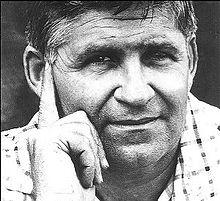
John Howard Griffin
John Howard Griffin

John Howard Griffin was an influential American journalist and writer, best known for his 1961 work 'Black Like Me', which documented his experience of passing as a black man to expose the harsh realities of racial segregation. His work had a profound impact on racial equality and social justice. more

You May Also Like

“I was nineteen at the time, and like any other besotted teenage girl, I was desperately eager to please the object of my affections. I didn’t argue the point, but set to work producing the desired loaf. The result was barely chewable when it emerged hot from the oven. By the time it cooled, it seemed significantly more resistant to fire, flood, or earthquakes than my dormitory’s concrete walls. After a brief discussion, Gabriel and I both decided that this rye-brick was more appropriate food for crows than for humans. I carried the slab to the balcony of my eighth-floor dormitory apartment, expecting that a fall from that height would smash it to crumbs. I peered over the edge to make sure no one was below me; I didn’t want to drop the hardened mass onto someone’s head and make a murderess of myself. After verifying that the concrete walkway below was clear, I dropped the rye-brick over the side of the balcony. Down, down, it plummeted—past the seventh floor, the sixth, the fifth … Nearly a hundred feet below, and traveling somewhere around eighty feet per second, the rye-brick finally hit the ground—and didn’t break. Despite an eight-story drop onto concrete, the rye-brick maintained its integrity. One of my roommates inspected the situation and expressed surprise that the stones of the walkway itself remained unscathed. I didn’t try making any wheat-free loaves for a while after that.”

“I pondered on this desert hospitality and, compared it with our own. I remembered other encampments where I had slept, small tents on which I had happened in the Syrian desert and where I had spent the night. Gaunt men in rags and hungry-looking children had greeted me, and bade me welcome with the sonorous phrases of the desert. Later they had set a great dish before me, rice heaped round a sheep which they had slaughtered, over which my host poured liquid golden butter until it flowed down on to the sand; and when I protested, saying 'Enough! Enough!', had answered that I was a hundred times welcome. Their lavish hospitality had always made me uncomfortable, for I had known that as a result of it they would go hungry for days. Yet when I left them they had almost convinced me that I had done them a kindness by staying with them”

“I knew that I had made my last journey in the Empty Quarter and that a phase in my life was ended. Here in the desert I found all that I asked; I knew that I should never find it again. But it was not only this personal sorrow that distressed me. I realized that the Bedu with whom I had lived and traveled, and in whose company I had found contentment, were doomed. Some people maintain that they will be better off when they have exchanged the hardship and poverty of the desert for the security of a materialistic world. This I do not believe. I shall always remember how often I was humbled by those illiterate herdsmen who possessed, in so much greater measure than I, generosity and courage, endurance, patience and lighthearted gallantry. Among no other people have I ever felt the same sense of personal inferiority.”

“While attending the Citadel, I had gone into an uncontrollable rapture when I read Ernest Hemingway's A Moveable Feast. He made the city of Paris glisten with a romantic luster it has never lost for me, and I could think of no finer way to spend a part of my life than by writing a book in the storied, uncapturable city of literature and light.”