Quotessence
Home / Quotes / Quote by Fyodor Dostoevsky

Quote by Fyodor Dostoevsky

“And it has always been a mystery, and I've marveled a thousand times at this ability of man (and, it seems, of the Russian man above all) to cherish the highest ideal in his soul alongside the greatest baseness, and all that in perfect sincerity. --The Adolescent (or, The Raw Youth)”

Quote by Fyodor Dostoevsky

Author
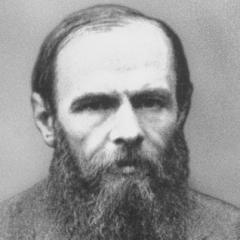
Fyodor Dostoevsky
Fyodor Dostoevsky

A renowned Russian novelist and a pioneer of psychological novels. His works deeply reveal the complexity of human nature and the injustice of society, having a profound impact on literature worldwide. more

You May Also Like

“A person without a purpose is a human being merely breathing because he does not know where he is, let alone knowing where he is going. Purposelessness is lifelessness.”

“It doubtless seems highly paradoxical to assert that Time is unreal, and that all statements which involve its reality are erroneous. Such an assertion involves a far greater departure from the natural position of mankind than is involved in the assertion of the unreality of Space or of the unreality of Matter. So decisive a breach with that natural position is not to be lightly accepted. And yet in all ages the belief in the unreality of time has proved singularly attractive.”

“All who are not lunatics are agreed about certain things. That it is better to be alive than dead, better to be adequately fed than starved, better to be free than a slave. Many people desire those things only for themselves and their friends; they are quite content that their enemies should suffer. These people can be refuted by science: mankind has become so much one family that we cannot insure our own prosperity except by insuring that of everyone else. If you wish to be happy yourself, you must resign yourself to seeing others also happy.”

“Men wiser and more learned than I have discerned in history a plot, a rhythm, a predetermined pattern. These harmonies are concealed from me. I can see only one emergency following upon another as wave follows upon wave, only one great fact with respect to which, since it is unique, there can be no generalizations; only one safe rule for the historian: that he should recognize in the development of human destinies the play of the contingent and the unforeseen.”

“The supernatural Christ of the New Testament, the god of orthodox Christianity, is dead. But priestcraft lives and conjures up the ghost of this dead god to frighten and enslave the masses of mankind. The name of Christ has caused more persecutions, wars, and miseries than any other name has caused. The darkest wrongs are still inspired by it. The wails of anguish that went up from Kishinev, Odessa, and Bialystok still vibrate in our ears.”