Quotessence
Home / Quotes / Quote by Giorgio Agamben

Quote by Giorgio Agamben

“The stakes in the debate between Benjamin and Schmitt on the state of exception can now be defined more clearly. The dispute takes place in a zone of anomie that, on the one hand, must be maintained in relation to the law at all costs, and, on the other, must be just as implacably released and freed from this relation. That is to say, at issue in the anomic zone is the relation between violence and law - in the last analysis, the status of violence as a cipher for human action. While Schmitt attempts every time to reinscribe violence within a juridical context, Benjamin responds to this gesture by seeking every time to assure it - as pure violence - an existence outside of law. For reasons that we must try to clarify, this struggle for anomie seems to be as decisive for Western politics as the gigantomachia peri tes ousias, the 'battle of giants concerning being', that defines Western metaphysics. Here, pure violence as the extreme political object, as the 'thing' of politics, is the counterpart to pure being, to pure existence as the ultimate metaphysical stakes; the strategy of the exception, which must ensure the relation between anomic violence and law, is the counterpart to the onto-theo-logical strategy aimed at capturing pure being the meshes of the logos.”

Quote by Giorgio Agamben

Work

The Omnibus Homo Sacer

This book is a compilation of various academic essays and studies that delve into the philosophical and sociological implications of Homo Sacer, a term from ancient Roman law referring to an individual who is outside the protection of the law and thus considered to be a sacrificeable person. more

Author
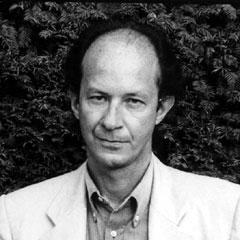
Giorgio Agamben
Giorgio Agamben

Giorgio Agamben is an Italian philosopher born on April 22, 1942. His research spans various fields including language, politics, aesthetics, and ethics, particularly known for his analyses of language, power, and the state of human existence. more

You May Also Like

“The intellectual ignominy of believing what we believe simply because of the time and place of our birth, escapes many evolutionists. Far from trying to overcome this natural prejudice of position, they raise it into a point of pride. They declare all opinions ever held in the past to be superseded, and are apparently content that their own should be superseded to-morrow, but meantime they cover you with obloquy if you are so backward or so forward as not to agree with them to-day. They accept as inevitable the total dominion of the point of view. Each new date, even in the life of an individual thinker, is expected by them to mark a new phase of doctrine. Indeed, truth is an object which transcendental philosophy cannot envisage: the absolute ego must be satisfied with consistency. How should the truth, actual, natural, or divine, be an expression of the living will that attempts, or in their case despairs, to discover it? Yet that everything, even the truth, is an expression of the living will, is the corner-stone of this philosophy.”

“Einiges tut sich aber immerhin diesbezüglich. Im Stadtpark von Redmond habe ich ein Zeichen entdeckt. Der Park ist schön, mit reicher, relativ frei wachsender Vegetation, irgendwie als Versuch, einen so natürlichen Raum wie nur irgend möglich nachzugestalten. Es wurden auch ein paar Wildentenpaare gebracht, aber deren Schicksal ist recht unsicher. Groß war meine Überraschung, als ich auf einer großen Tafel am See, auf dem die betreffenden Enten ausgesetzt worden waren, in Kurzfassung eine „Prosopopöie der Enten“ lesen konnte. (Die Prosopopöie ist bekanntlich die rhetorische Figur, mit deren Hilfe man Gegenstände oder Tiere anstelle der Menschen sprechen lässt.) Was erzählte nun diese Tafel? Aus dem angeblichen Entendiskurs, der von einem recht stupiden Hirn verfasst worden war, erfuhren wir Folgendes: „Füttert mich, bitte, nicht! Füttert ihr mich, werde ich Mist machen. Mache ich Mist, verschmutze ich den Park. Verschmutze ich den Park, werde ich eingeschläfert.“ Klingt nach Blödsinn, aber die Geschichte hat eine wahre Grundlage. Man ist irgendwie zu dem Schluss gekommen, dass die Entenexkremente giftig sind(!) und eine Gefahr für die Bürger darstellen, die im Park spazieren gehen. Die von einem Verantwortungsträger – die gibt es immer und überall – vorgeschlagene Endlösung war die Vergasung. Also die Enten würden eingefangen und an einem abgelegenen Ort mit einem tödlichen Gift „eingeschläfert“ werden. Also put to sleep, wenn die armen Vögel nicht in der Lage waren sauberen Mist zu machen. Ich frage mich nun, ob unsere Hausenten für den rumänischen Bauern denn nicht genauso giftig sind. Ja, was für einen Mist machen diese denn? (Aus "Adio, adio, patria mea...")”

“E ingrozitoare uneori aceasta putere a unei singure propozitiuni, in timpul unei convorbiri normale, ca sa porneasca dintr-o data macinarea sufleteasca, asa cum din zecile de combinatii cu sapte litere ale unui lacat secret, una singura deschide spre interior. In asemenea imprejurari, noptile mi le petreceam in lungi insomnii, uscate si mistuitoare.”

“Umanii faceau mereu lucruri pe care nu la placea sa le faca. De fapt, in conformitate cu cea mai buna estimare a mea, in orice moment dat, doar 0.3 procente dintre umani faceau, in mod activ, ceva ce le placea sa faca si, chiar si cand o faceau, simteau o cantitate arzatoare de vina in legatura cu asta si isi promiteau, cu ravna lor insisi ca se vor reintoarce la a face ceva oribil de neplacut foarte, foarte curand.”