“For me, the most ironic token of [the first human moon landing] is the plaque signed by President Richard M. Nixon that Apollo 11 took to the moon. It reads: "We came in peace for all Mankind." As the United States was dropping 7 ½ megatons of conventional explosives on small nations in Southeast Asia, we congratulated ourselves on our humanity. We would harm no one on a lifeless rock.”
Quote by Carl Sagan
Work
Pale Blue Dot: A Vision of the Human Future in Space
This book delves into the possibilities of human expansion into space, reflecting on the implications and significance of our existence in the vastness of the universe. more
Author
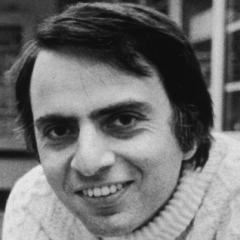
Carl Sagan
Carl Sagan was an American astronomer, cosmologist, author, and science communicator, born on November 9, 1934, in Brooklyn, New York. He is renowned for his profound research into the cosmos and his dedication to popularizing science. Sagan proposed numerous theories about the origin of the universe and life, and he made complex scientific knowledge accessible to the public with his unique perspective and clear, engaging writing style. more
You May Also Like
Source: On Earth We're Briefly Gorgeous
Source: ألزهايمر
Source: The Everlasting Man
Source: HUMANITY Understanding Reality and Inquiring Good
Source: I Can Only Imagine - The Songs of MercyMe
Source: The Burning Maze
Source: The Last Star
Source: This Savage Song
Source: Brighton rock