Quotessence
Home / Quotes / Quote by Philip Larkin

Quote by Philip Larkin

“What do they think has happened, the old fools, To make them like this ? Do they somehow suppose It's more grown-up when your mouth hangs open and drools And you keep on pissing yourself, and can't remember Who called this morning ? Or that, if they only chose, They could alter things back to when they danced all night, Or went to their wedding, or sloped arms some September ? Or do they fancy there's really been no change, And they've always behaved as if they were crippled or tight, Or sat through days of thin continuous dreaming Watching light move ? If they don't (and they can't), it's strange: Why aren't they screaming ? At death, you break up: the bits that were you Start speeding away from each other for ever With no one to see. It's only oblivion, true: We had it before, but then it was going to end, And was all the time merging with a unique endeavour To bring to bloom the million-petalled flower Of being here. Next time you can't pretend There'll be anything else. And these are the first signs: Not knowing how, not hearing who, the power Of choosing gone. Their looks show that they're for it: Ash hair, toad hands, prune face dried into lines- How can they ignore it ? Perhaps being old is having lighted rooms Inside your head, and people in them, acting. People you know, yet can't quite name; each looms Like a deep loss restored, from known doors turning, Setting down a Iamp, smiling from a stair, extracting A known book from the shelves; or sometimes only The rooms themselves, chairs and a fire burning, The blown bush at the window, or the sun' s Faint friendliness on the wall some lonely Rain-ceased midsummer evening. That is where they live: Not here and now, but where all happened once. This is why they give An air of baffled absence, trying to be there Yet being here. For the rooms grow farther, leaving Incompetent cold, the constant wear and tear Of taken breath, and them crouching below Extinction' s alp, the old fools, never perceiving How near it is. This must be what keeps them quiet. The peak that stays in view wherever we go For them is rising ground. Can they never tell What is dragging them back, and how it will end ? Not at night? Not when the strangers come ? Never, throughout The whole hideous inverted childhood? Well, We shall find out.”

Quote by Philip Larkin

Author
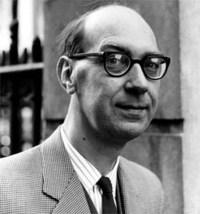
Philip Larkin
Philip Larkin

Philip Larkin (August 9, 1922 – December 2, 1985) was a renowned English poet, novelist, and librarian. He is widely regarded as one of the greatest poets of post-war Britain, known for his concise, bleak, and ironic style. Born in Coventry, Larkin studied at St John's College, Oxford. His major works include the poetry collections 'The Whitsun Weddings' and 'High Windows', and the novel 'Jill'. He spent most of his career as librarian at the University of Hull. Larkin's poetry often explores themes of death, loneliness, love, and the absurdity of everyday life. He rejected modernism in favor of traditional forms, and his precise, musical language earned him the Queen's Gold Medal for Poetry. His work continues to influence poets and readers worldwide. more

You May Also Like

“There have been many plagues in the world as there have been wars, yet plagues and wars always find people equally unprepared. [...] When a war breaks out people say: 'It won't last, it's too stupid.' And war is certainly too stupid, but that doesn't prevent it from lasting. Stupidity always carries doggedly on, as people wold notice if they were not always thinking about themselves. In this respect, the citizens of Oran were like the rest of the world, they thought about themselves, in other words, they were humanists: they did not believe in pestilence. A pestilence does not have human dimensions, so people tell themselves that it is unreal, that it is a bad dream which will end. But it does not always end and, from one bad dream to the next, it is people who end, humanists first of all because they have not prepared themselves.”

“All other trades are contained in that of war. Is that why war endures? No. It endures because young men love it and old men love it in them. Those that fought, those that did not. That's your notion. The judge smiled. Men are born for games. Nothing else. Every child knows that play is nobler than work. He knows too that the worth or merit of a game is not inherent in the game itself but rather in the value of that which is put at hazard. Games of chance require a wager to have meaning at all. Games of sport involve the skill and strength of the opponents and the humiliation of defeat and the pride of victory are in themselves sufficient stake because they inhere in the worth of the principals and define them. But trial of chance or trial of worth all games aspire to the condition of war for here that which is wagered swallows up game, player, all.”

“For two years the battles raged across the lands, one side fighting for conquest, the other for freedom. Othium-powered weapons wreaked havoc on defending armies. The red fire was hard to resist, but the white light was stronger. Gradually the tide turned and the freedom fighters regained control of their lands and their cities. The stage was set for the final battle. The opposing forces met outside the Ackar city of Erbea in 1302 and the forces of good won the day. The alchemist escaped and was about to take his revenge at a wedding ceremony when he was bound by the white light. All that remained was his heart, or maybe his soul, encapsulated in a piece of red rock. Dewar the Third succeeded his father and the new king promised a time of peace and prosperity. History would call him the Peacemaker. Now, two hundred years on, a new Emperor seeks to rule the world, while an illegitimate son sets out on a path towards revenge and a thief begins to learn his trade. It is time for the alchemist to return.”

“I have gone to war and now I can issue my complaint. I can sit on my porch and complain all day. And you must listen. Some of you will say to me: You signed the contract, you crying bitch, and you fought in a war because of your signature, no one held a gun to your head. This is true, but because I signed the contract and fulfilled my obligation to fight one of America’s wars, I am entitled to speak, to say, I belong to a fucked situation.”

“That summer, Titanic fever gripped Kabul. People smuggled pirated copies of the film from Pakistan- sometimes in their underwear. After curfew, everyone locked their doors, turned out the lights, turned down the volume, and reaped tears for Jack and Rose and the passengers of the doomed ship. If there was electrical power, Mariam, Laila, and the children watched it too. A dozen times or more, they unearthed the TV from behind the tool-shed, late at night, with the lights out and quilts pinned over the windows. At the Kabul River, vendors moved into the parched riverbed. Soon, from the river's sunbaked hollows, it was possible to buy Titanic carpets, and Titanic cloth, from bolts arranged in wheelbarrows. There was Titanic deodorant, Titanic toothpaste, Titanic perfume, Titanic pakora, even Titanic burqas. A particularly persistent beggar began calling himself "Titanic Beggar." "Titanic City" was born. It's the song, they said. No, the sea. The luxury. The ship. It's the sex, they whispered. Leo, said Aziza sheepishly. It's all about Leo. "Everybody wants Jack," Laila said to Mariam. "That's what it is. Everybody wants Jack to rescue them from disaster. But there is no Jack. Jack is not coming back. Jack is dead.”