Quotessence
Home / Quotes / Quote by Immanuel Wallerstein

Quote by Immanuel Wallerstein

“Far from being Eurocentric, my analysis "exoticizes" Europe. Europe is historically aberrant. In some ways this was a historical accident, not entirely Europe's fault. But, in any case, it is nothing about which Europe should boast. Perhaps Europe and the world will one day be cured of this terrible malady with which Europe (and through Europe the world) has been afflicted.”

Quote by Immanuel Wallerstein

Author
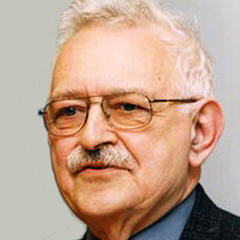
Immanuel Wallerstein

Immanuel Wallerstein is a renowned American sociologist known for his contributions to world-systems theory. His research focuses on globalization and international relations, profoundly influencing the understanding of the modern world order. more

You May Also Like

“And what’s wrong with buying and selling?” ... “Nothing. In its place, nothing at all. A simple and necessary thing. But only a small thing in a man’s life - not his whole existence - not an end in itself - not a way of life or a source of one’s beliefs. And this is what it has become. A tragic joke, to make a religion of it... This is spiritual death. Where is there room here for what is good and beautiful, for time to re-formulate the eternal questions, for study of man’s conduct? A savage who worships a tree lives a richer life.”

“A diamond may be forever, but terrorism, promiscuously funded, will be too. Let's make the connection clearly by tracing the path of the diamond. Diamonds start out in the earth, and eventually that earth is part of a country, like Sierra Leone, Angola, or the Democratic Republic of Congo. In those countries, desperate battles for control have been going on for decades, and the armies that fight the battles finance their ambitions with diamonds. Villagers are forced to mine the diamonds by ruthless rebels who maintain order through terror: by raping women and hacking off the limbs of the children, something, by the way, you never see in the De Beers ads. The rebels then smuggle the diamonds into neighboring dictatorships in exchange for guns and cash. There the diamonds are sold to the highest bidder--whether they be terrorists or "legitimate" dealers--and finally they're laundered in Europe, shipped to America, and end up in jewelry stores where they're purchased by men and given to women in exchange for oral sex. In the feminized world we live in, it's practically national policy that women are more evolved that men--but if that's so, how come they're still so impressed by shiny objects?”

“De Beers set up a purchasing office in Monrovia in 1954 where they bought diamonds, with the intent of keeping as much of the diamond trade under its control as possible. However by 1956, while I was still in Monrovia, there were approximately 75,000 illegal miners, who were smuggling these valuable stones on a vast scale. At that time I was offered the opportunity to get involved in this bonanza, which I fortunately did not do since some of my friends who did, went missing never to be seen again. At that time I was the Captain of a Farrell Line’s coastal ship and made additional pocket money running booze into the Liberian interior. In those days when someone disappeared or fell off of the grid, as we would say, the chance that they would be found again was exceedingly slim. In 1984 the De Beers Group (SLST) from South Africa, sold its remaining shares, under duress, to the Precious Metals Mining Company controlled by Lebanese National, Jamil Sahid Mohamed Khalil, was a questionable local businessman, as well as a diamonds and commodities trader. He became known throughout the world’s diamond industry as a wheeler-dealer and a politician, influential in Sierra Leone, where the majority of the blood diamonds came from. In 1999, when South African mercenaries invaded Sierra Leone’s capital city Freetown, Jamil attempted to flee from this West African country but was stopped prior to leaving his home. During this altercation, one of Jamil’s sons was shot to death right in front of him. The following year, Jamil died of a stroke after having successfully made his way to Lebanon.”