Quotessence
Home / Quotes / Quote by William Dean Howells

Quote by William Dean Howells

Work

Editha

Browse quotes and source details for this work. more

Author

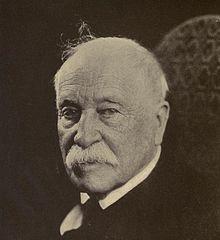
William Dean Howells

William Dean Howells was a prominent American author, literary critic, and editor in the 19th century. His works, which encompassed novels, criticism, and essays, had a profound impact on American literature. more

You May Also Like

“At the point of creation, two poles of the Absolute, Universal Mind (Something) and Absolute Void (Nothing) become creators of the world. The Universal Mind is the active “pole,” and the Absolute Void (Nothingness) is the passive “pole.” At the “moment” of creation, the Universal Mind envelops nothingness by the size of its program, but there is always nothingness “beyond” this nothingness unaffected by the creation. There can be many of these creations or universes. All of them together form the Universe. The Universe we live in is only a speck of the real Universe we cannot identify based on our current technology. It is a big question whether we will ever be able to glimpse the Absolute except through abstract thought and imagination, which are, in my opinion, legitimate methods not only of philosophical investigation but also scientific ones.”

“Time to change, ladies." The stranger's deep, penetrating voice rumbled through Zara's body. Rich and full, it was the kind of voice that made lawyers spill milkshakes and babble incoherently as they thrust sticky business cards into celebrity hands. "Is there a problem?" Parvati made a show of inspecting her weapon while Zara tried to untie her tongue. Although she couldn't see the dude's face, he was tall---at least six-two---and powerfully built, the top of his coveralls unzipped and tied around his narrow waist. His black T-shirt clung to his broad shoulders and magnificent pecs as if it had been painted on his muscular body. One thick, deeply tanned forearm bunched and flexed as he unholstered his weapon in one smooth practiced motion.”

“I smelled blood. You were hurt." And then, with a hesitation in his voice I had never heard from him before: "I... don't like the idea of you being hurt." My heart hammered in my rib cage at the reluctant admission. He'd been about to rip that kid's head off. All because he thought I might have been injured. How was I supposed to process this? It had been a wild, indefensible reaction to a negligible injury. So why did I find his going feral like that one of the hottest things I'd ever experienced? If he'd reacted like this when I'd barely hurt myself, what might he do if I were really threatened?”

“These men suffer. Their anguish and despair has no limits or boundaries. They suffer in a society that does not want men to change, that does not want men to reconstruct masculinity so that the basis for the social formation of male identity is not rooted in an ethic of domination. Rather than acknowledge the intensity of their suffering, they dissimulate. They pretend. They act as though they have power and privilege when they feel powerless. Inability to acknowledge the depths of male pain makes it difficult for males to challenge and change patriarchal masculinity. Broken emotional bonds with mothers and fathers, the traumas of emotional neglect and abandonment that so many males have experienced and been unable to name, have damaged and wounded the spirits of men. Many men are unable to speak their suffering. Like women, those who suffer the most cling to the very agents of their suffering, refusing to resist sexism or sexist oppression. Their refusal is rooted in the fear that their weakness will be exposed. They fear acknowledging the depths of their pain. As their pain intensifies, so does their need to do violence, to coercively dominate and abuse others. Barbara Deming explains: “I think the reason that men are so very violent is that they know, deep in themselves, that they’re acting a lie, and so they’re furious. You can’t be happy living a lie, and so they’re furious at being caught in the lie. But they don’t know how to break out of it, so they just go further into it.” For many men the moment of violent connection may be the only intimacy, the only attainable closeness, the only space where the agony is released. When feminist women insist that all men are powerful oppressors who victimize from the location of power, they obscure the reality that many victimize from the location of victimization. The violence they do to others is usually a mirroring of the violence enacted upon and within the self.”

“If we removed the status and compensation from the destructive exploits we classify as “manly,” men would be found to be suffering as much as women. They would be found to be suffering for the same reason: they are in exile from the communion of men and women, which is their deepest connection with the communion of all creatures.”

“A fit of passionate sobbing choked her. She crouched on the floor like a wounded thing, and Dorian Gray, with his beautiful eyes, looked down at her, and his chiseled lips curled in exquisite disdain. There is always something ridiculous about the emotions of people whom one has ceased to love. Sibyl Vane seemed to him to be absurdly melodramatic, her tears and sobs annoyed him.”

“Todos los pájaros son mujeres que han recibido un castigo. En los mitos populares de nuestra provincia, Entre Ríos, pero también de Corrientes y de Misiones (tengo un libro que ubica cada mito en detalle), el castigo para la desobediencia, la mala conducta o el amor desesperado es ser transformada en ave. [...] Caminar por la orilla del Paraná y ver una bandada de pájaros es imaginarse rodeada de mujeres reprendidas, metamorfoseadas contra su voluntad, rogando volver a ser humanas. Escuchar los cantos de los pájaros a la noche, cuando el calor no deja dormir, es un concierto de llantos viudos y de injusticia." "Los pájaros de la noche", Un lugar soleado para gente sombría, pp.36-37”