“These men suffer. Their anguish and despair has no limits or boundaries. They suffer in a society that does not want men to change, that does not want men to reconstruct masculinity so that the basis for the social formation of male identity is not rooted in an ethic of domination. Rather than acknowledge the intensity of their suffering, they dissimulate. They pretend. They act as though they have power and privilege when they feel powerless. Inability to acknowledge the depths of male pain makes it difficult for males to challenge and change patriarchal masculinity. Broken emotional bonds with mothers and fathers, the traumas of emotional neglect and abandonment that so many males have experienced and been unable to name, have damaged and wounded the spirits of men. Many men are unable to speak their suffering. Like women, those who suffer the most cling to the very agents of their suffering, refusing to resist sexism or sexist oppression. Their refusal is rooted in the fear that their weakness will be exposed. They fear acknowledging the depths of their pain. As their pain intensifies, so does their need to do violence, to coercively dominate and abuse others. Barbara Deming explains: “I think the reason that men are so very violent is that they know, deep in themselves, that they’re acting a lie, and so they’re furious. You can’t be happy living a lie, and so they’re furious at being caught in the lie. But they don’t know how to break out of it, so they just go further into it.” For many men the moment of violent connection may be the only intimacy, the only attainable closeness, the only space where the agony is released. When feminist women insist that all men are powerful oppressors who victimize from the location of power, they obscure the reality that many victimize from the location of victimization. The violence they do to others is usually a mirroring of the violence enacted upon and within the self.”
Quote by Bell Hooks
Work
This book delves into the societal constructs of masculinity and how they influence men's experiences in love and life. It examines the challenges and opportunities for change in the context of personal development and intimate relationships. more
Author
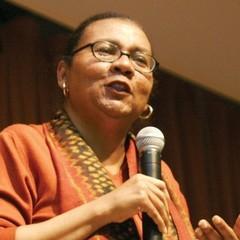
Bell Hooks, born Gloria Jean Watkins, is an American author, scholar, and activist. Her work primarily focuses on issues of race, gender, and social justice, particularly on feminist and black feminist thought. Hooks' works include novels, poetry, academic writings, and autobiographies, and her writing style is beloved by readers for its profound social insight and desire for change. more
You May Also Like
“War is a masculine merchandise.”
“So the year went on, a dark year, though now each day had that one bright hour at its dawn.”
“No sé mucho sobre el amor, y si vieras las ganas que tengo de enamorarme de alguien.”
“Uno solo se enamora de verdad cuando no se da cuenta de que lo está haciendo.”