Quotessence
Home / Quotes / Quote by George Orwell

Quote by George Orwell

“His eye fell upon the aspidistra. Two years he had inhabited this vile room; two mortal years in which nothing had been accomplished.”

Quote by George Orwell

Author
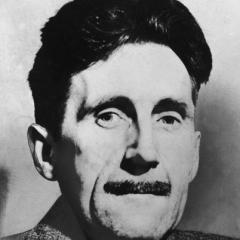
George Orwell
George Orwell

George Orwell, born Eric Arthur Blair, was a British novelist and political critic. Known for his sharp social criticism and profound insights into totalitarianism, Orwell is best remembered for his novels '1984' and 'Animal Farm', which remain influential to this day. more

You May Also Like

“It certainly inhibits a man's desire to change companies for a better job. Thus, it is at least a minor pressure against free-spirited enterprise. All the benefits exert pressure, too. There is nothing sinister about them, since admittedly they are for your own material comfort -- and isn't that supposed to be one of the goals of mankind? What happens is that, as the years go by, the temptation to strike out on your own or take another job becomes less and less. Gradually you become accustomed to the Utopian drift. Soon another inhibition may make you even more amenable. If you have been in easy circumstances for a number of years, you feel that you are out of shape. Even in younger men the hard muscle of ambition tends to go slack, and you hesitate to take a chance in the jungle again.”

“... she exclaimed, the innate respectability of the middle-class housewife rising impulsively to the surface through the acquired dilettantism of the 'light woman.' People who enjoyed 'picking-up' things, who admired poetry, despised sordid calculations of profit and loss, and nourished ideals of honour and love, she placed in a class by themselves, superior to the rest of humanity.”

“She approached them all without a trace of sentimentality or condescension. The older Docklanders were accustomed to meeting middle-class do-gooders, who deigned to act graciously to inferiors. The Cockneys despised these people, used them for what they could get, and made fun of them behind their backs, but Sister Evangelina had no patronising airs and graces.”

“How remote we were too from the crazy musicians who arrived on a blustery fall day with the idea that, since this was a financial center, there would be a rain of coins from the tall buildings in response to their trumpet, guitar, and bass fiddle. The wind swirled their jazz among the canyons. I saw that no one was paying them the slightest attention. Feeling guilty, I threw them a quarter, but they didn't see it. They danced and made jazz in the cold, while upstairs we went on with our work, and they didn't exist, and it was nobody's fault.”

“The middle-class standard of the independent self has increasingly become the default American standard for how to think, feel and act in the world…this middle class self is not just a matter of individual attitudes or beliefs; it is an understanding of what it means to be a person that is built into and promoted by the social machinery – law, politics, education, employment, media, and health care of mainstream American society. Although the independent self is widely accepted as the cultural standard, it is not the natural, normal, neutral or even the most effective way of being a person. Instead, it is a privileged and culture-specific understanding of what it means to be a person that flows seamlessly from the resources, opportunities, and experiences linked with middle-class American standing in society.”