Quotessence
Home / Quotes / Quote by Stephen Crane

Quote by Stephen Crane

“ONCE, I KNEW A FINE SONG, —IT IS TRUE, BELIEVE ME,— IT WAS ALL OF BIRDS, AND I HELD THEM IN A BASKET; WHEN I OPENED THE WICKET, HEAVENS! THEY ALL FLEW AWAY. I CRIED, ’COME BACK, LITTLE THOUGHTS!’ BUT THEY ONLY LAUGHED. THEY FLEW ON UNTIL THEY WERE AS SAND THROWN BETWEEN ME AND THE SKY.”

Quote by Stephen Crane

Work

The Black Riders and Other Lines

Browse quotes and source details for this work. more

Author
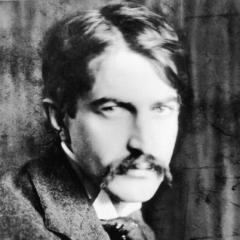
Stephen Crane
Stephen Crane

Stephen Crane was a prominent American author of the late 19th century, known for his realistic style and profound portrayals of war and poverty. His most famous work, 'The Red Badge of Courage,' is considered one of the greatest war novels in American literary history. more

You May Also Like

“I started with the first note, sa. On the first day, to my dismay, Dhondutai made me sing only the base note- the tonal pillar of Indian music which remains unchanged, constant, reliable, and stoically oblivious to the whims and fancies of the other notes. It is the foundation, the first and last note, the point at which the circle begins and ends. Within the boundaries of sa, one can play out all of life's dramas and moods. But every time one gets back to it, there is a sense of closure- like coming home after a long and exciting journey.”

“The most common cycle used is the sixteen beat cycle, called teentaal or tritaal. Dha dhin dhin dha. Dha dhin dhin dha. Dha tin tin ta. Ta dhin dhin dha…sixteen beats divided neatly into four times four. The sixteen-beat cycle starts and ends and stars and ends, creating a repetitive circularity; the melody has to accommodate itself within its scaffolding; it has to negotiate with the parameters to find a happy balance between freedom and responsibility, rights and duties, exhilaration and restraint. There is scope for risk-taking, within reason, as long as one came back to the line of control in time, and hit sama, the drum stroke where one cycle ended and the new one began; a point of arrival and of departure. This is a musical metaphor for life as it should be lived. Truly great musicians can swerve into unchartered bylanes, but still find their way back to the destination. On time”

“When she went back for her first lesson, Dhondutai automatically greeted het teacher by touching her feet. Kesarbai held her shoulders, lifted her gently and said, "You are a Brahmin's daughter. There is no need for you to do that." But this was something Dhondutai would not compromise on- even though she knew that she and Kesarbai occupied two ends of the social order in which women were either 'good' or 'bad', respectable or indecent. These were labels that had been stuck on by men, by society, and Dhondutai would not fall into that trap.”