Quotessence
Home / Quotes / Quote by Barack Obama

Quote by Barack Obama

“If there's a child on the south side of Chicago who can't read, that matters to me, even if it's not my child. If there's a senior citizen somewhere who can't pay for their prescription, who has to choose between medicine and the rent, that makes my life poorer - even if it's not my grandparent. If there's an Arab-American or Mexican-American family being rounded up by John Ashcroft without benefit of an attorney or due process, I know that that threatens my civil liberties. And I don't have to be a woman to be concerned that the Supreme Court is trying to take away a woman's right, because I know that my rights are next. It is that fundamental belief - I am my brother’s keeper, I am my sister’s keeper - that makes this country work.”

Quote by Barack Obama

Author
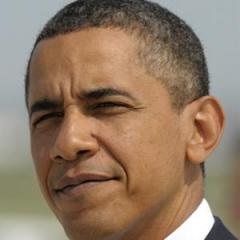
Barack Obama
Barack Obama

Barack Obama, born on August 4, 1961, served as the 44th President of the United States from 2009 to 2017. He is the first African American to hold the office. Obama's presidency was marked by significant achievements, including the Affordable Care Act and the normalization of relations with Cuba. He was awarded the Nobel Peace Prize in 2009. more

You May Also Like

“The advantages of a hereditary Monarchy are self-evident. Without some such method of prescriptive, immediate and automatic succession, an interregnum intervenes, rival claimants arise, continuity is interrupted and the magic lost. Even when Parliament had secured control of taxation and therefore of government; even when the menace of dynastic conflicts had receded in to the coloured past; even when kingship had ceased to be transcendental and had become one of many alternative institutional forms; the principle of hereditary Monarchy continued to furnish the State with certain specific and inimitable advantages. Apart from the imponderable, but deeply important, sentiments and affections which congregate around an ancient and legitimate Royal Family, a hereditary Monarch acquires sovereignty by processes which are wholly different from those by which a dictator seizes, or a President is granted, the headship of the State. The King personifies both the past history and the present identity of the Nation as a whole. Consecrated as he is to the service of his peoples, he possesses a religious sanction and is regarded as someone set apart from ordinary mortals. In an epoch of change, he remains the symbol of continuity; in a phase of disintegration, the element of cohesion; in times of mutability, the emblem of permanence. Governments come and go, politicians rise and fall: the Crown is always there. A legitimate Monarch moreover has no need to justify his existence, since he is there by natural right. He is not impelled as usurpers and dictators are impelled, either to mesmerise his people by a succession of dramatic triumphs, or to secure their acquiescence by internal terrorism or by the invention of external dangers. The appeal of hereditary Monarchy is to stability rather than to change, to continuity rather than to experiment, to custom rather than to novelty, to safety rather than to adventure. The Monarch, above all, is neutral. Whatever may be his personal prejudices or affections, he is bound to remain detached from all political parties and to preserve in his own person the equilibrium of the realm. An elected President – whether, as under some constitutions, he be no more than a representative functionary, or whether, as under other constitutions, he be the chief executive – can never inspire the same sense of absolute neutrality. However impartial he may strive to become, he must always remain the prisoner of his own partisan past; he is accompanied by friends and supporters whom he may seek to reward, or faced by former antagonists who will regard him with distrust. He cannot, to an equal extent, serve as the fly-wheel of the State.”

“When has sounding like a completely ignorant moron ever stopped our elected officials? Never, that's when. You're going to make mistakes, and even if you don't, we promise you will still feel stupid at one point or another. It'll pass, and no one was paying that much attention anyway. Move forward with a sprinkle of the delusion that your least favorite politician would proudly display.”

“So obsessed is Dio with Cleopatra's vanity that he forgets she was also a skilled politician. She yields Pelusium, he asserts, as "She expected to gain not only forgiveness and the sovereignty over the Egyptians, but the empire of the Romans as well." Cleopatra could generally be counted on to do the intelligent thing. Dio has her engaged with the nonsensical. She was fighting for her life, her throne, and her children. She had ruled for two decades, and was without illusions. She knew Octavian was deeply enamored not with her but with her wealth. Into the mausoleum she heaped gems, jewelry, works of art, coffers of gold, royal robes, stores of cinnamon and frankincense, necessities to her, luxuries tot he rest of the world. With those riches went as well as a vast quantity of kindling. Were she to disappear, the treasure of Egypt would disappear with her. The thought was a torture to Octavian.”