Quotessence
Home / Quotes / Quote by Peter S. Beagle

Quote by Peter S. Beagle

Work

A Fine and Private Place

Browse quotes and source details for this work. more

Author
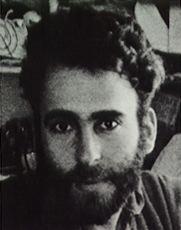
Peter S. Beagle
Peter S. Beagle

Peter S. Beagle is an American author born on April 20, 1939. Known for his science fiction and fantasy literature, his works include classics such as 'The Last Unicorn' and 'The Golden Apples of the Sun'. His writing combines rich imagination with profound philosophical insights, making a significant impact on science fiction and fantasy literature. more

You May Also Like

“There is a Marian "style" to the Church's work of evangelization. Whenever we look to Mary, we come to believe once again in the revolutionary nature of love and tenderness. in her we see that humility and tenderness ar enot virtues of the weak but of the strong, who need not treat others poorly in order to feel important themselves. Contemplating Mary, we realize that she who praised God for "bringing down the mighty from their thrones" and "sending the rich away empty" (Luke 1:52-53) is also the one who brings a homely warmth to our pursuit of justice. She is also the one who carefully keeps "all these things, pondering them in heart" (Luke 2:19). Mary is able to recognize the traces of God's Spirit in events great and small. She constantly contemplates the mystery of God in our world, in human history, and in our daily lives. She is the woman of prayer and work in Nazareth, and she is also Our Lady of Help, who sets out from her town "with haste" (Luke 1:39) to be of service to others. This interplay of justice and tenderness, of contemplation and concern for others, is what makes the ecclesial community look to Mary as a model of evangelization.”

“The light of love proper to faith can illumine the question of our own time-concerning truth. Truth, nowadays, is often reduced to the subjective authenticity of the individual, valid only to the life of the individual. A common truth intimidates us, for we identify it with the intransigent demands of totalitarian systems. But if truth is a truth of love, if it is a truth disclosed in personal encounter with the Other and with others, then it can be set free from its enclosure in individuals and become part of the common good. As a truth of love, it is not one that can be imposed by force; it is not a truth that stifles the individual. Since it is born of love, it can penetrate to the heart, to the personal core of each man and woman. Clearly, then, faith is not intransigent but grows in respectful coexistences with others. One who believes may not be presumptuous; on the contrary, truth leads to humility, because believers know that, rather than ourselves possessing truth, it is truth that embraces and possesses us. Far from making us inflexible, the security of faith sets us on a journey; it enables witness and dialogue with all.”

“For the Church, the option for the poor is primarily a theological category rather than a cultural, sociological, political, or philosophical one. God shows the poor "his first mercy." This divine preference has consequences for the faith life of all Christians, because we are called to have "this mind...which was in Jesus Christ" (Phil. 2:5). Inspired by this, the Church has made an option for the poor, which is understood as a "special form of primacy in the exercise of Christian charity, to which the whole tradition of the Church bears witness." This option - as Benedict XVI has taught - "is implicit in our Christian faith in a God who became poor for us, so as to enrich us with his poverty." This is why I want a Church that is poor and for the poor. They have much to teach us. Not only do they share in the sensus fidei, but in their difficulties they know the suffering Christ. We need to let ourselves be evangelized by them. The new evangelization is an invitation to acknowledge the saving power at work in their lives and to put them at the center of the Church's pilgrim way. We are called to find Christ in them, to lend our voice to their causes, but also to be their friends, to listen to them, to speak for them, and to embrace the mysterious wisdom that God wishes to share with us through them.”

“My definition of a true religion is one that does good in the world. It tries to find ways to help people be themselves. It does not try to shape people to be what we think they should be, then break spiritual or man-made laws to accomplish that. The sign of a good religion is that it helps the people grow to become more godlike, to be capable of more love and mercy---for themselves as well as for others.”