Quotessence
Home / Quotes / Quote by Philip K. Dick

Quote by Philip K. Dick

“Grief reunites you with what you've lost. It's a merging; you go with the loved thing or person that's going away. You follow it a far as you can go. But finally,the grief goes away and you phase back into the world. Without him. And you can accept that. What the hell choice is there? You cry, you continue to cry, because you don't ever completely come back from where you went with him -- a fragment broken off your pulsing, pumping heart is there still. A cut that never heals. And if, when it happens to you over and over again in life, too much of your heart does finally go away, then you can't feel grief any more. And then you yourself are ready to die. You'll walk up the inclined ladder and someone else will remain behind grieving for you.”

Quote by Philip K. Dick

Work

Flow My Tears, the Policeman Said

In this novel, a man wakes up to find that he has been replaced by an identical stranger. The story delves into the complexities of identity and the nature of reality, as the protagonist struggles to regain his own life. more

Author
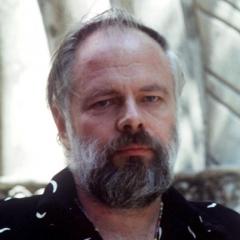
Philip K. Dick
Philip K. Dick

Philip K. Dick was an American science fiction novelist known for his unique philosophical thinking and profound futuristic imagination. His works often explore the boundaries between individuals and society, reality and illusion, and have had a profound impact on science fiction literature. more

You May Also Like

“People who have recently lost someone have a certain look, recognizable maybe only to those who have seen that look on their own faces. I have noticed it on my face and I notice it now on others. The look is one of extreme vulnerability, nakedness, openness. It is the look of someone who walks from the ophthalmologist's office into the bright daylight with dilated eyes, or of someone who wears glasses and is suddenly made to take them off. These people who have lost someone look naked because they think themselves invisible. I myself felt invisible for a period of time, incorporeal. I seemed to have crossed one of those legendary rivers that divide the living from the dead, entered a place in which I could be seen only by those who were themselves recently bereaved. I understood for the first time the power in the image of the rivers, the Styx, the Lethe, the cloaked ferryman with his pole. I understood for the first time the meaning in the practice of suttee. Widows did not throw themselves on the burning raft out of grief. The burning raft was instead an accurate representation of the place to which their grief (not their families, not the community, not custom, their grief) had taken them.”

“Sometimes she'd go a whole day without thinking of him or missing him. Why not? She had quite a full life, and really, he'd often been hard to deal with and hard to live with. A project, the Yankee oldtimers like her very own Dad might have said. And then sometimes a day would come, a gray one (or a sunny one) when she missed him so fiercely she felt empty, not a woman at all anymore but just a dead tree filled with cold November blow. She felt like that now, felt like hollering his name and hollering him home, and her heart turned sick with the thought of the years ahead and she wondered what good love was if it came to this, to even ten seconds of feeling like this.”

“Monday, June 9: People think they know you. They think they know how you're handling a situation. But the truth is no one knows. No one knows what happens after you leave them, when you're lying in bed or sitting over your breakfast alone and all you want to do is cry or scream. They don't know what's going on inside your head--the mind-numbing cocktail of anger and sadness and guilt. This isn't their fault. They just don't know. And so they pretend and they say you're doing great when you're really not. And this makes everyone feel better. Everybody but you.”

“Isn't it weird," I said, "the way you remember things, when someone's gone?" What do you mean?" I ate another piece of waffle. "When my dad first died, all I could think about was that day. It's taken me so long to be able to think back to before that, to everything else." Wes was nodding before I even finished. "It's even worse when someone's sick for a long time," he said. "You forget they were ever healthy, ever okay. It's like there was never a time when you weren't waiting for something awful to happen." But there was," I said. "I mean, it's only been in the last few months that I've started remembering all this good stuff, funny stuff about my dad. I can't believe I ever forgot it in the first place." You didn't forget," Wes said, taking a sip of his water. "You just couldn't remember right then. But now you're ready to, so you can." I thought about this as I finished off my waffle.”

“There is much asked and only so much I think I can or should answer, and so, in this post I would like to give a few thoughts on what seemed to be the overwhelming question: “WHY?” And here is the best answer I can give: Because. Because sometimes, life is damned unfair. Because sometimes, we lose people we love and it hurts deeply. Because sometimes, as the writer, you have to put your characters in harm’s way and be willing to go there if it is the right thing for your book, even if it grieves you to do it. Because sometimes there aren’t really answers to our questions except for what we discover, the meaning we assign them over time. Because acceptance is yet another of life’s “here’s a side of hurt” lessons and it is never truly acceptance unless it has cost us something to arrive there. Why, you ask? Because, I answer. Inadequate yet true.”