Quotessence
Home / Quotes / Quote by Rabindranath Tagore

Quote by Rabindranath Tagore

“The child who is decked with prince’s robes and who has jewelled chains round his neck loses all pleasure in his play; his dress hampers him at every step. In fear that it may be frayed, or stained with dust he keeps himself from the world, and is afraid even to move. Mother, it is no gain, thy bondage of finery, if it keep one shut off from the healthful dust of the earth, if it rob one of the right of entrance to the great fair of common human life.”

Quote by Rabindranath Tagore

Work

Gitanjali

Gitanjali is a collection of poems that explores themes of love, nature, and spiritual longing. The work is known for its lyrical beauty and philosophical depth, reflecting the poet's deep connection to both the natural world and the divine. more

Author

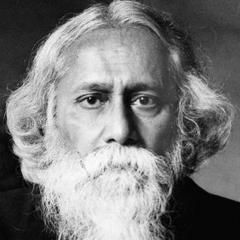
Rabindranath Tagore
Rabindranath Tagore

Rabindranath Tagore, a renowned Indian poet, writer, philosopher, and social activist, was born on May 7, 1861, in Calcutta, and passed away on August 7, 1941. Tagore's works blend the influences of traditional Indian literature and Western literature, and his poetry, novels, plays, and essays have won the hearts of readers worldwide. He was the first Asian writer to win the Nobel Prize in Literature, and his works have had a profound impact on world literature. more

You May Also Like

“Being out there doing your best and what you’re supposed to do, will energize you like nothing else. Living your purpose and destiny makes you feel alive and it gives you vitality. If you're tired, it's because you're not living your best life. It's time to start living your best life. It's time to live the life your're Destined to live.”

“Thais accept what has happened, which is not to say they like what happened or want it to happen again. Of course not. But they take the long view: eternity. If things don’t work out in this life, there is always the next one, and the next one, and so on. Periods of good fortune naturally alternate with periods of adversity, just as sunny days are interspersed with rainy ones. It’s the way things are. In a worldview like this, blame doesn’t feature prominently, but fortune – destiny- does, and I was curious about mine.”