Quotessence
Home / Quotes / Quote by Marguerite Duras

Quote by Marguerite Duras

“And modern houses don't have passages, either, for children to play and run about in, and for dogs, umbrellas, coats and satchels. And don't forget that passages and corridors are where the young ones curl up and go to sleep when they're tired, and where you go and collect them to put them to bed. That's where they go when they're four years old and have had enough of the grown-ups and their philosophy. That's where, when they're unsure of themselves, they go and have a quiet cry. Houses never have enough room for children, not even if they're castles. Children don't actually look at houses, but they know them and all their nooks and crannies better than their mothers do. They rummage about. They snoop around. They don't consciously look at houses any more than they look at the walls of flesh that enclose them before they can see anything at all — but they know them. It's when they leave the house that they look at it.”

Quote by Marguerite Duras

Work

Practicalities

This book offers practical advice and solutions for navigating daily challenges and improving one's life through common sense and practical strategies. more

Author
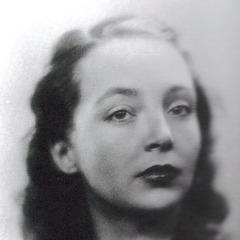
Marguerite Duras
Marguerite Duras

Marguerite Duras was a renowned French writer born on April 4, 1914, and passed away on March 3, 1996. Her works are known for their unique narrative style and profound social insight, with notable titles including 'The Lover' and 'The River'. more

You May Also Like

“Witchcraft? Seriously? In spite of this, I spent the next hour reading everything I could find online about stregheria. Its existence was a pervasive legend through Italy, particularly in the Napoli region: the first streghe were believed to have originated in medieval times in Benevento, while the sea witches specifically had originated in the Positano region. As a whole, the women were known for reciting strange incantations and venerating various amulets, the most important of which was a cimaruta, a sort of talisman necklace meant to protect the water. It featured tiny branches, like coral, and charms such as hearts or moons. These women, I learned, were largely practitioners of benevolent kitchen magic: they worked with babies and herbs and gemstones. Today, many women still practiced forms of stregheria, though they were taken about as seriously as other practitioners of the esoteric, like mediums or Reiki healers. Which was to say, not very seriously at all. On an obscure website about the legends of the streghe del mare, I stumbled across a register of sea-spell incantations and their associated tools. I thought the list seemed rather ludicrous--- mermaid's combs and century-long spells?--- but interesting, nevertheless, and I found myself googling images of hagstones and shark egg sacks.”

“Some say that the spiritual founder of the Rosicrucians was Paracelsus himself. In Huser's edition of his Prognostication Concerning the Next Twenty-four Years there is a woodcut of a child looking toward a heap of Paracelsus's books, some inscribed with a capital R and one bearing the word Rosa. But the significance of this imagery for the Rosicrucians seems spurious.* The rose that the secret society chose as its symbol is in fact derived from the emblem of Martin Luther, in which a heart and cross spring from the center of the flower. The movement began as a society of Protestant Paracelsians founded by the alchemist Johann Valentin Andreae of Herrenberg. *The Paracelsus connection remains puzzling, however. In the first edition of the Philosophia Magna, published by Birckmann in 1567, the Hirschvogel woodcut of Paracelsus appears in modified form with various strange images in the background that later became clearly associated with Rosicrucianism, such as a child's head emerging from a cleft in the ground. What is the significance of these symbols, fifty years before the Rosicrucian movement came into the open?”