Quotessence
Home / Quotes / Quote by Philip Ball

Quote by Philip Ball

“Some say that the spiritual founder of the Rosicrucians was Paracelsus himself. In Huser's edition of his Prognostication Concerning the Next Twenty-four Years there is a woodcut of a child looking toward a heap of Paracelsus's books, some inscribed with a capital R and one bearing the word Rosa. But the significance of this imagery for the Rosicrucians seems spurious.* The rose that the secret society chose as its symbol is in fact derived from the emblem of Martin Luther, in which a heart and cross spring from the center of the flower. The movement began as a society of Protestant Paracelsians founded by the alchemist Johann Valentin Andreae of Herrenberg. *The Paracelsus connection remains puzzling, however. In the first edition of the Philosophia Magna, published by Birckmann in 1567, the Hirschvogel woodcut of Paracelsus appears in modified form with various strange images in the background that later became clearly associated with Rosicrucianism, such as a child's head emerging from a cleft in the ground. What is the significance of these symbols, fifty years before the Rosicrucian movement came into the open?”

Quote by Philip Ball

Work

Author

Philip Ball
Philip Ball

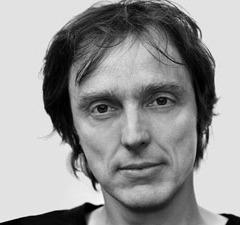
Philip Ball, born in 1962, is a distinguished science writer. His works cover a wide range of scientific topics, including chemistry, physics, biology, and materials science. Ball is known for his engaging writing style and his ability to popularize scientific knowledge. more

You May Also Like

“The precision in these artifacts is irrefutable. Even if we ignore the question of how they were produced, we are still faced with the question of why such precision was needed. Revelation of new data invariably raises new questions. In this case it is understandable for skeptics to ask, "Where are the machines?" But machines are tools, and the question should be applied universally and can be asked of anyone who believes other methods may have been used. The truth is that no tools have been found to explain any theory on how the pyramids were built or the granite boxes were cut. More than eighty pyramids have been discovered in Egypt, and the tools that built them have never been found. Even if we accepted the notion that copper tools are capable of producing these incredible artifacts, the few copper implements that have been uncovered do not represent the number of such tools that would have been used if every stonemason who is supposed to have worked on the pyramids at just the Giza site owned one or two. In the Great Pyramid alone there are an estimated 2,300,000 blocks of stone, both limestone and granite, weighing between two-and-one-half tons and seventy tons each. That is a mountain of evidence, and there are no tools surviving to explain even this one pyramid's creation.”

“The origin myth of the Tukano speaks of the time, eons ago, when humans first settled the great rivers of the Amazon basin. It seems that 'supernatural beings' accompanied them on this journey and gifted them the fundamentals upon which to build a civilized life. From the 'Daughter of the Sun' they received the gift of fire and the knowledge of horticulture, pottery-making, and many other crafts. 'The serpent-shaped canoe of the first settlers' was steered by a superhuman 'Helmsman.' Meanwhile other supernaturals 'travelled by canoe over all the rivers and ... explored the remote hill ranges; they pointed out propitious sites for houses or fields, or for hunting and fishing, and they left their lasting imprint on many spots so that future generations would have ineffaceable proof of their earthly days and would forever remember them and their teachings.”

“That's all the motorcycle is, a system of concepts worked out in steel. There's no part in it, no shape in it, that is not out of someone's mind [...] I've noticed that people who have never worked with steel have trouble seeing this—that the motorcycle is primarily a mental phenomenon. They associate metal with given shapes—pipes, rods, girders, tools, parts—all of them fixed and inviolable., and think of it as primarily physical. But a person who does machining or foundry work or forger work or welding sees "steel" as having no shape at all. Steel can be any shape you want if you are skilled enough, and any shape but the one you want if you are not. Shapes, like this tappet, are what you arrive at, what you give to the steel. Steel has no more shape than this old pile of dirt on the engine here. These shapes are all of someone's mind. That's important to see. The steel? Hell, even the steel is out of someone's mind. There's no steel in nature. Anyone from the Bronze Age could have told you that. All nature has is a potential for steel. There's nothing else there.”

“The knowledge needed to evaluate certain of these ancient artifacts was not available until very recently. Even today there may be numerous articles that we will not understand until we further develop our own technology. We cannot fathom technology that is unknown to us, and we seldom consider things that seem impossible to us. Petrie, though knowledgeable in engineering and surveying, could not be expected to know anything about ultrasonic machining; hence his amazement at the machining abilities of the ancient Egyptians. Even if he had been aware of this technology, the intellectual climate of his time may have precluded his considering the possibility that these methods were known to the ancient Egyptians. Quite simply, the greatest barrier to our understanding may not necessarily be knowledge. It may be attitude.”