Quotessence
Home / Authors / Philip Ball Biography
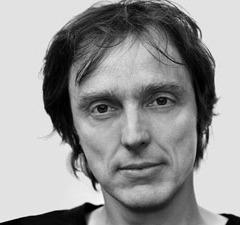
Philip Ball

Philip Ball Biography

Science writer

Related Quotes

“Everything that seems strange about quantum mechanics comes down to measurement. If we take a look, the quantum system behaves one way. If we don’t, the system does something else. What’s more, different ways of looking can elicit apparently mutually contradictory answers. If we look at a system one way, we see this; but if we look at the same system another way, we see not merely that but not this. The object went through one slit; no, it went through both. How can that be? How can ‘the way nature behaves’ depend on how – or if – we choose to observe it?”

“When it’s said that quantum mechanics is ‘weird’, or that nobody understands it, the image tends to invite the analogy of a peculiar person whose behaviour and motives defy obvious explanation. But this is too glib. It’s not so much understanding or even intuition that quantum mechanics defies, but our sense of logic itself. Sure, it’s hard to intuit what it means for objects to travel along two paths at once, or to have their properties partly situated some place other than the object itself, and so on. But these are just attempts to express in everyday words a state of affairs that defeats the capabilities of language. Our language is designed to reflect the logic we’re familiar with, but that logic won’t work for quantum mechanics.”

“So long as we don’t try to figure out which slit [electrons] go through, they will behave as if they go through both at once. But if we try to pin down which slit they pass through, they only go through one. The mere act of making the measurement – even if we can be pretty sure that the measurement shouldn’t obstruct or influence the electron’s path – appears to turn a wave into a particle. Yes, appears to. Does the electron really pass through both slits at once when we’re not looking at its path? Does it change from wave to particle when we do look? These are, according to Bohr’s view of quantum mechanics, illegitimate questions, precisely because they are insisting on some microscopic description underlying the measurements we make. Bohr argued that there is nothing in quantum mechanics that permits us to formulate such a description. That is not what the Schrödinger equation is about. It just predicts the outcomes of measurements.”

“If different physics is ‘all’ you want, you can look (say) to Einstein’s theories of special and general relativity, in which motion and gravity slow time and bend space. That’s not easy to imagine, but I reckon you can do it. You just need to imagine time passing more slowly, distances contracting: distortions of your grid references. You can put those ideas into words. In quantum theory, words are blunt tools. We give names to things and processes, but those are just labels for concepts that cannot be properly, accurately expressed in any terms but their own.”

“Wavefunction collapse is a generator of knowledge: it is not so much a process that gives us the answers, but is the process by which answers are created. The outcome of that process can’t, in general, be predicted with certainty, but quantum mechanics gives us a method for calculating the probabilities of particular outcomes. That’s all we can ask for.”

“Here is the answer to Einstein’s question about the moon. Yes, it is there when no one observes it – because the environment is already, and without cease, ‘measuring’ it. All of the photons of sunlight that bounce off the moon are agents of decoherence, and more than adequate to fix its position in space and give it a sharp outline. The universe is always looking.”

“Computer simulation often works fine if we assume nothing more than Newton’s laws at the atomic scale, even though we know that really we should be using quantum, not classical, mechanics at that level. But sometimes approximating the behaviour of atoms as though they were classical billiard-ball particles isn’t sufficient. We really do need to take quantum behaviour into account to accurately model chemical reactions involved in industrial catalysis or drug action, say. We can do that by solving the Schrödinger equation for the particles, but only approximately: we need to make lots of simplifications if the maths is to be tractable. But what if we had a computer that itself works by the laws of quantum mechanics? Then the sort of behaviour you’re trying to simulate is built into the very way the machine operates: it is hardwired into the fabric. This was the point Feynman made in his article. But no such machines existed. At any rate they would, as he pointed out with wry understatement, be ‘machines of a different kind’ from any computer built so far. Feynman didn’t work out the full theory of what such a machine would look like or how it would work – but he insisted that ‘if you want to make a simulation of nature, you’d better make it quantum-mechanical’.”

“Peasants brought up on a tradition of superstitious magic could hardly be expected to distinguish between such ostensibly Christian rituals and the mumbled incantations of the local wizard. And so, to the discomfort of the priests, many came to regard elements of Christian devotion as simple magical spells. The Latin Mass was, after all, incomprehensible to the common people, so it already had the aspect of an occult formula. It came to be seen, like magic, as an essentially mechanical rite through which absolution was achieved by observing the correct procedures. In that case, there was no real need for faith.”

“Better still [than pure sugar] was the remedy known as theriac, the root of the English word 'treacle,' which was kept in ornate ceramic jars on the shelves of every self-respecting apothecary shop. The name comes from the Greek therion, meaning 'venomous animal,' for theriac was supposed in Classical times to counteract all venoms and poisons.”

“No matter who you were in sixteenth-century Europe, you could be sure of two things: you would be lucky to reach fifty years of age, and you could expect a life of discomfort and pain. Old age tires the body by thirty-five, Erasmus lamented, but half the population did not live beyond the age of twenty. There were doctors and there was medicine, but there does not seem to have been a great deal of healing. Anyone who could afford to seek a doctor's aid did so eagerly, but the doctor was as likely to maim or kill as to cure. His potions were usually noxious and sometimes fatal—but they could not have been as terrible and traumatic as the contemporary surgical methods. The surgeon and the Inquisitor differed only in their motivation: otherwise, their batteries of knives, saws, and tongs for slicing, piercing, burning, and amputating were barely distinguishable. Without any anesthetic other than strong liquor, an operation was as bad as the torments of hell.”

“Some say that the spiritual founder of the Rosicrucians was Paracelsus himself. In Huser's edition of his Prognostication Concerning the Next Twenty-four Years there is a woodcut of a child looking toward a heap of Paracelsus's books, some inscribed with a capital R and one bearing the word Rosa. But the significance of this imagery for the Rosicrucians seems spurious.* The rose that the secret society chose as its symbol is in fact derived from the emblem of Martin Luther, in which a heart and cross spring from the center of the flower. The movement began as a society of Protestant Paracelsians founded by the alchemist Johann Valentin Andreae of Herrenberg. *The Paracelsus connection remains puzzling, however. In the first edition of the Philosophia Magna, published by Birckmann in 1567, the Hirschvogel woodcut of Paracelsus appears in modified form with various strange images in the background that later became clearly associated with Rosicrucianism, such as a child's head emerging from a cleft in the ground. What is the significance of these symbols, fifty years before the Rosicrucian movement came into the open?”

“What is striking is these things [patterns in nature, e.g. fish stripes] do look like something that has been crafted. We are conditioned to think that a pattern needs a patterner and so at first glance it seems incredible to us that nature is able to do this, without any sort of blueprint, without any sort of plan. These patterns organise themselves, that is the amazing thing.”