“There is no such thing as a special biblical hermeneutics. But we have to learn that hermeneutics which is alone and generally valid by means of the Bible as the witness of revelation. We therefore arrive at the suggested rule, not from a general anthropology, but from the Bible, and obviously, as the rule which is alone and generally valid, we must apply it first to the Bible. The fact that we have to understand and expound the Bible as a human word can now be explained rather more exactly in this way: that we have to listen to what it says to us as a human word. We have to understand it as a human word in the light of what it says. Under the caption of a truly "historical" understanding of the Bible we cannot allow ourselves to commend an understanding which does not correspond to the rule suggested: a hearing in which attention is paid to the biblical expressions but not to what the words signify, in which what is said is not heard or overheard; an understanding of the biblical words from their immanent linguistic and factual context, instead of from what they say and what we hear them say in this context; an exposition of the biblical words which in the last resort consists only in an exposition of the biblical men in their historical reality. To this we must say that it is not an honest and unreserved understanding of the biblical word as a human word, and it is not therefore an historical understanding of the Bible. In an understanding of this kind the Bible cannot be witness. In this type of understanding, in which it is taken so little seriously, indeed not at all, as a human word, the possibility of its being witness is taken away from the very outset. The philosophy which lies behind this kind of understanding and would force us to accept it as the only true historical understanding is not of course a very profound or respectable one. But even if we value it more highly, or highest of all, and are therefore disposed to place great confidence in its dictates, knowing what is involved in the understanding of the Bible, we can only describe this kind of understanding of the reality of a human word as one which cannot possibly do justice to its object. Necessarily, therefore, we have to reject most decisively the intention of even the most profound and respectable philosophy to subject any human word and especially the biblical word to this understanding. The Bible cannot be read unbiblically. And in this case that means that it cannot be read with such a disregard for its character even as a human word. It cannot be read so unhistorically. §19.1, pp. 466-467)”
Quote by Karl Barth
Work
Church Dogmatics 1.2: The Doctrine of the Word of God
Browse quotes and source details for this work. more
Author
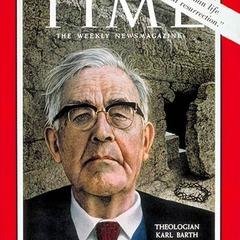
Karl Barth
Karl Barth was a Swiss theologian born on May 10, 1886, and died on December 10, 1968. He is considered one of the most influential theologians of the 20th century, known for his critical theological method and profound biblical exegesis. more
You May Also Like
Source: The Rise and Fall of the Bible: The Unexpected History of an Accidental Book
Source: The Rise and Fall of the Bible: The Unexpected History of an Accidental Book
Source: The Rise and Fall of the Bible: The Unexpected History of an Accidental Book
Source: The Rise and Fall of the Bible: The Unexpected History of an Accidental Book
Source: The Rise and Fall of the Bible: The Unexpected History of an Accidental Book
Source: The Rise and Fall of the Bible: The Unexpected History of an Accidental Book
Source: The Rise and Fall of the Bible: The Unexpected History of an Accidental Book
Source: The Rise and Fall of the Bible: The Unexpected History of an Accidental Book
Source: Billy Graham in Quotes
Source: Billy Graham in Quotes