Quotessence
Home / Quotes / Quote by Charles Baudelaire

Quote by Charles Baudelaire

“La Nature est un temple où de vivants piliers Laissent parfois sortir de confuses paroles ; L'homme y passe à travers des forêts de symboles Qui l'observent avec des regards familiers.”

Quote by Charles Baudelaire

Work

Les Fleurs Du Mal

Charles Baudelaire's 'Les Fleurs Du Mal' is a seminal work of French poetry, known for its exploration of complex emotional states and its innovative use of language. The collection delves into themes of love, beauty, and the darker sides of human existence, showcasing Baudelaire's unique poetic style and his exploration of the human psyche. more
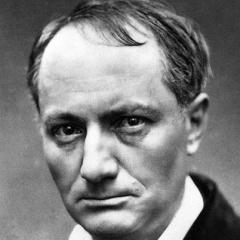
Author

Charles Baudelaire
Charles Baudelaire

Charles Baudelaire, a renowned French poet and literary critic, was born on April 9, 1821, and died on August 31, 1867. His poetry is known for its unique symbolism and has had a profound impact on modern literature. more

You May Also Like

“Both for practical reasons and for mathematically verifiable moral reasons, authority and responsibility must be equal - else a balancing takes place as surely as current flows between points of unequal potential. To permit irresponsible authority is to sow disaster; to hold a man responsible for anything he does not control is to behave with blind idiocy. The unlimited democracies were unstable because their citizens were not responsible for the fashion in which they exerted their sovereign authority... other than through the tragic logic of history... No attempt was made to determine whether a voter was socially responsible to the extent of his literally unlimited authority. If he voted the impossible, the disastrous possible happened instead - and responsibility was then forced on him willy-nilly and destroyed both him and his foundationless temple.”

“It seemed that his spontaneous roaming was a well-planned learning expedition. I suspect that his rebellion and degeneracy were also premeditated. Apparently, they were a kind of intellectual rule, akin to a monastic rule, designed to lead to enlightenment. Unfortunately, his study curriculum also involved a significant degree of self-destruction as the fastest path to self-discovery.”

“On that September Sunday, when the excited Paul went to meet Rimbaud, the worst began. Young Rimbaud, that great talent, that poetic genius whom all of Paris supposedly awaited, must have missed Paul at the train station because he arrived alone. To our astonishment, maman and I did not see any genius but rather an uncouth and unkempt boy in shabby, dirty attire, who spoke strangely with an Ardennes accent, if he spoke at all, for he hardly said anything. He had no luggage, which raised suspicion with my mother. A person without luggage was not to be trusted. But he had beautiful blue eyes that looked shy, or so I thought at the time. Meanwhile, those innocent eyes gazed at the world cunningly and maliciously, as it would soon become apparent. Behind that childlike, pretty face of a doll hid a corrupted monster that shattered our family happiness.”

“The Abduction refers to an autobiographical event in Al-Masri’s life. When, as a young Arab woman living in France, she decides to separate from her husband with whom she has a child, the father kidnaps the baby and returns to Syria. The Abduction is the story of a woman who is denied the basic right to raise her child. Al-Masri won’t see her son for thirteen years. These are haunting poems of love, despair, and hope in a delicate, profound and powerful book on intimacy, a mother’s rights, war, exile, and freedom.”

“Arthur was six years old when I left the family. Due to my infrequent stays at home, we did not form a strong bond. Occasionally, I longed for the lost fatherhood. Did he long for his lost childhood? I did not have a chance to tell him about the sea in which the stars float, about the red, fiery sunrises and sunsets, about the storm that tosses a ship like a nutshell, about flocks of screeching seagulls, schools of fish, and picturesque islets. I wanted to spin a tale about life in the desert, about the scorching sand burning the feet and the hot air shimmering with strange mirages. About wild, freedom-loving people, bizarre customs, and exotic beasts. I remember him squatting over a puddle at dusk.”

“Not long after, a response came. Verlaine invited Rimbaud to Paris. He sent along a one-way ticket. Paris was waiting for the young genius. It was about time. Arthur’s mother had had enough of him, and her ultimatum was running out: either he would find a job or he would be out on the street. He was almost seventeen and was neither in job nor in education, even though peace had come, and the school had reopened its doors.”

“Paul went to pick him up at the train station, but they must have failed to meet because Rimbaud came on his own, on foot. I expected him to be similar to my beloved romantic poets. Beautiful and childishly pure like Alfred de Musset. Or divinely handsome like Lamartine, with the appearance of a Greek god. Or manly and strikingly comely like Chateaubriand, gazing at the sea as the breeze blows his long curls of hair. As a young girl, I was in love with the poetry of our bards and their portraits. Meanwhile, here in front of our well-kept house, I saw a sloppy rascal in tattered clothes, with disheveled hair, a sweaty face, and no luggage! I was itching to ask: and where is your Sunday garb? A change of underwear? Toothbrush, clothes brush, shoe brush, handkerchief, comb? Well, call me overly idealistic, but I genuinely believed that a normal person couldn’t do without these things.”

“Because even though the portrait itself is interesting, I don’t look very favorable in it. I resemble Jesus Christ after twenty years of drinking absinthe. I have serious, sadly drooping eyes and the pale, emaciated face of a consumptive. Pastel colors have been set free, fluttering like butterflies. At first glance, they seem to have no fixed place on the canvas, only the gaze of the observer can pin them down. They are soft and resonate chromatically.”