Quotessence
Home / Quotes / Quote by Annie Ernaux

Quote by Annie Ernaux

“Algunas veces me decía a mí misma que tal vez se pasaba un día entero sin pensar ni un segundo en mí. Lo veía levantarse, tomarse el café, hablar, reír, como si yo no existiera. Ese desfase respecto a mi propia obsesión me llenaba de asombro. ¿Cómo era posible? Pero él mismo se habría quedado de una pieza al saber que yo no me lo quitaba de la cabeza en todo el día. No había motivo alguno para encontrar mi actitud más justa que la suya. En cierto sentido, yo tenía más suerte que él. Cuando él telefoneaba para que nos viéramos, su tan esperada llamada no cambiaba nada, yo seguía con la misma dolorosa tensión de antes. Me hallaba en un estado en el que ni siquiera la realidad de su voz conseguía hacerme feliz. Todo era una carencia sin fin, salvo el momento en que estábamos juntos haciendo el amor. Y, aun así, me obsesionaba el momento que vendría a continuación, cuando se hubiera marchado. Vivía el placer como un dolor futuro.”

Quote by Annie Ernaux

Author
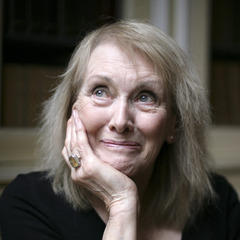
Annie Ernaux
Annie Ernaux

Annie Ernaux, born on September 1, 1940, is a renowned French writer known for her autobiographical novels. Her works delve into the relationship between personal memory and history, as well as the impact of social class on individual destiny. more

You May Also Like

“When he was very young, Auberon had begun a collection of postmarks. On a trip with Doc to the post office in Meadowbrook, he had begun idly examining the wastebaskets, having nothing else to do, and had immediately come up with two treasures: envelopes from places that seemed fantastically distant to him, and looking remarkably crisp for having come so far. It soon developed into a small passion, like Lily's for bird's nests. He insisted on accompanying whoever was traveling near a post office; he conned his friends' mail; he gloated over distant cities, far states whose names began with I, and, rarest of all, names from across the sea. Then one day Joy Flowers, whose granddaughter had lived abroad for a year, gave him a fat brown bag full of envelopes sent her from every part of the world. He could hardly find on the map a place which had not stamped its name on one of these pieces of blue flimsy. Some of them came from places so distant they weren't even in the alphabet he knew. And at a stroke his collection was complete, and his pleasure in it over. No discovery he could make in Meadowbrook's post office could add to it. He never looked at it again.”

“My true-love hath my heart and I have his, By just exchange one for the other given: I hold his dear, and mine he cannot miss; There never was a bargain better driven. His heart in me keeps me and him in one; My heart in him his thoughts and senses guides: He loves my heart, for once it was his own; I cherish his because in me it bides. His heart his wound received from my sight; My heart was wounded with his wounded heart; For as from me on him his hurt did light, So still, methought, in me his hurt did smart: Both equal hurt, in this change sought our bliss, My true-love hath my heart and I have his.”

“Will my little cat starve in Paris?' he asked. 'I don't know,' said Père. 'I don't know who will take us in or where we shall go. Cats are never happy in strange places. You ought to have left her behind. She would have fed herself. Someone would take care of her.' 'No,' whispered Julius, 'no - never, never anyone but me. What is mine cannot belong to another person. Père, do you understand? Tell me you understand.”

“You are indeed teaching me about kinds of love I did not know. It is like looking into a deep pit. I'm not sure whether I like your kind better than hatred. Oh, Orual- to take my love for you, because you know it goes down to my very roots and cannot be diminished by any other newer love, and then to make of it a tool, a weapon, a thing of policy and mastery, an instrument of torture- I begin to think I never knew you. Whatever comes after, something that was between us dies here.”

“There she was before him in all her Aboriginal glory. Brown eyes and skin so tan it was nearly black. Her smile—a wondrous thing. Her lips—he imagined that by the end of summer, they’d be kissing him on the way home from Gravity Park. To Iron, elevated as she was in his poetic imagination, she had become something else entirely, obscuring lines between fact and fiction, between science and religion. Nothing made sense—and yet everything did.”