“Anyone can be made to feel like an outsider. It’s up to the people who have the power to exclude. Often it’s on the basis of race. Depending on a culture’s fears and biases, Jews can be treated as outsiders. Muslims can be treated as outsiders. Christians can be treated as outsiders. The poor are always outsiders. The sick are often outsiders. People with disabilities can be treated as outsiders. Members of the LGBTQ community can be treated as outsiders. Immigrants are almost always outsiders. And in most every society, women can be made to feel like outsiders—even in their own homes. Overcoming the need to create outsiders is our greatest challenge as human beings. It is the key to ending deep inequality. We stigmatize and send to the margins people who trigger in us the feelings we want to avoid. This is why there are so many old and weak and sick and poor people on the margins of society. We tend to push out the people who have qualities we’re most afraid we will find in ourselves—and sometimes we falsely ascribe qualities we disown to certain groups, then push those groups out as a way of denying those traits in ourselves. This is what drives dominant groups to push different racial and religious groups to the margins. And we’re often not honest about what’s happening. If we’re on the inside and see someone on the outside, we often say to ourselves, “I’m not in that situation because I’m different. But that’s just pride talking. We could easily be that person. We have all things inside us. We just don’t like to confess what we have in common with outsiders because it’s too humbling. It suggests that maybe success and failure aren’t entirely fair. And if you know you got the better deal, then you have to be humble, and it hurts to give up your sense of superiority and say, “I’m no better than others.” So instead we invent excuses for our need to exclude. We say it’s about merit or tradition when it’s really just protecting our privilege and our pride.”
Quote by Melinda Gates
Work
The Moment of Lift: How Empowering Women Changes the World
Browse quotes and source details for this work. more
Author
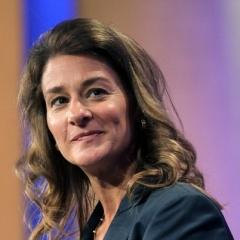
Melinda Gates
Melinda Gates is a distinguished businesswoman and philanthropist, co-founder of the Bill & Melinda Gates Foundation, one of the world's largest private foundations. She has been deeply involved in the foundation's efforts to improve global health and education, with a particular focus on reducing poverty and enhancing lives worldwide. more
You May Also Like
Source: Eileen
Source: 追逐金色的少年 [Zhui zhu jin se de shao nian] / The Outsiders
Source: Milkman
“Overcoming the need to create outsiders is our greatest challenge as human beings.”
Source: The Moment of Lift: How Empowering Women Changes the World
Source: Wrong Planet - Searching for your Tribe
“To them, we are outsiders, Reeve, and nobody is more vulnerable than a person who is other.”
Source: The Fire Star
Source: The Labyrinth of Solitude and Other Writings
Source: Spies of No Country: Secret Lives at the Birth of Israel