Quotessence
Home / Quotes / Quote by Stewart O'Nan

Quote by Stewart O'Nan

“He was breathing on his own and his red blood cell count was almost normal (not the white), that was it. Kitzi could see she wanted to believe this might make a difference and didn't contradict her. She knew from experience how tightly you clung to the smallest scrap of hope.”

Quote by Stewart O'Nan

Work

Evensong

Evensong is a fictional narrative that delves into the lives of individuals within a religious community. The story examines the complexities of faith, the search for redemption, and the impact of personal beliefs on the characters' lives. more

Author

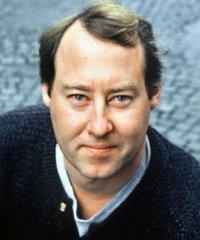
Stewart O'Nan
Stewart O'Nan

Stewart O'Nan is an American novelist known for his unique narrative style and profound insights into everyday life. His works often focus on the daily lives of ordinary people, depicting the complexity of human nature and the diversity of life through delicate pen strokes. more

You May Also Like

“You have said that if I declared my innocence you would believe me,” she exclaimed, lifting her head as I entered. “See here,” and laying her cheek against the pallid brow of her dead benefactor, she kissed the clay-cold lips softly, wildly, agonisedly, then, leaping to her feet, cried, in a subdued but thrilling tone: “Could I do that if I were guilty? Would not the breath freeze on my lips, the blood congeal in my veins, and my heart faint at this contact?”

“1948: The Best Years of Our Lives. The characters in the film have retained a candour towards - and naive faith in - their feelings which we no longer possess. Our feelings, which we delightfully term emotions in order to salvage the fiction of an emotional life, are not affects any more, merely a psychological affectation, having lost all credence in our eyes. Or, alternatively, they are conversion emotions, betraying the melodrama going on in the body rather than the nuances of the soul. We do not even have this candour in our relations to our dreams, where we grapple with their interpretation, their splitting, their ironic reflexes. But the worst thing is that not just life, but cinema too, seems to have lost all simplicity since that period. But the worst thing is that not just life, but cinema too, seems to have lost all simplicity since that period. It knows only how to parody itself affectedly, and has veered towards psychodrama or visual melodrama. Retrospectively, these were then, also, the 'Best Years' of cinema.”