Quotessence
Home / Quotes / Quote by Arthur Schopenhauer

Quote by Arthur Schopenhauer

“No man can see over his own height. Let me explain what I mean. You cannot see in another man any more than you have in yourself. Your own level strictly determines the extent to which he comes within your understanding. If your intelligence is unawakened, mental qualities in another, even though they be of the highest kind, will have no effect on you at all… his higher mental qualities will no more exist for you than colors exist for those who cannot see.”

Quote by Arthur Schopenhauer

Author
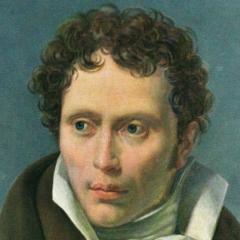
Arthur Schopenhauer
Arthur Schopenhauer

Arthur Schopenhauer was a prominent German philosopher born on February 22, 1788, and died on September 21, 1860. He is one of the most important figures in 19th-century German philosophy and is known for his unique pessimistic philosophical ideas. more

You May Also Like

“The first time I was ever called ugly, I was thirteen. It was a rich friend of my brother Carlton's, over to shoot guns in the field. "Why you crying girl?" Constantine asked me in the kitchen. I told her what the boy had called me, tears streaming down my face, "Well? Is you?" I blinked, paused my crying. "Is I what?" "Now you look a here, Eugenia" - because Constantine was the only one who'd occasionally follow Mama's rule. "Ugly live up on the inside. Ugly be hurtful, mean person. Is you one a them peoples?" "I don't know. I don't think so." I sobbed. Constantine sat down next to me, at the kitchen table. I heard the cracking of her swollen joints. She pressed her thumb hard in the palm of my hand, something we both knew meant 'Listen. Listen to me.' "Ever morning, until you dead in the ground, you gone have to make this decision." Constantine was so close, I could see the blackness of her gums. "You gone have to ask yourself, 'Am I gone believe what them fools say about me today?' She kept her thumb pressed hard in my hand. I nodded that I understood. I was just smart enough to realize she meant white people. And even though I still felt miserable, and knew what I was, most likely, ugly, it was the first time she ever talked to me like I was something besides my mother's white child. All my life I'd been told what to believe about politics, coloreds, being a girl. But with Constantine's thumb pressed in my hand, I realized I actually had a choice in what I could believe.”

“He recognized a portrait of Einstein because he picked up the characteristic hair and moustache; and the same thing happened with one or two other people. ‘Ach, Paul!’ he said, when shown a portrait of his brother. ‘That square jaw, those big teeth— I would know Paul anywhere!’ But was it Paul he recognized, or one or two of his features, on the basis of which he could make a reasonable guess as to the subject’s identity?”

“...he approached these faces— even of those near and dear—as if they were abstract puzzles or tests. He did not relate to them, he did not behold. No face was familiar to him, seen as a ‘thou’, being just identified as a set of features, an ‘it’. Thus, there was formal, but no trace of personal, gnosis. And with this went his indifference, or blindness, to expression. A face, to us, is a person looking out—we see, as it were, the person through his persona, his face.”

“I had stopped at a florist on my way to his apartment and bought myself an extravagant red rose for my buttonhole. Now I removed this and handed it to him. He took it like a botanist or morphologist given a specimen, not like a person given a flower. About six inches in length,’ he commented. ‘A convoluted red form with a linear green attachment.”

“It’s just like the eating,’ she explained. ‘I put his usual clothes out, in all the usual places, and he dresses without difficulty, singing to himself. He does everything singing to himself. But if he is interrupted and loses the thread, he comes to a complete stop, doesn’t know his clothes—or his own body. He sings all the time—eating songs, dressing songs, bathing songs, everything. He can’t do anything unless he makes it a song.”

“Jimmie both was and wasn’t aware of this deep, tragic loss in himself, loss of himself. (If a man has lost a leg or an eye, he knows he has lost a leg or an eye; but if he has lost a self—himself—he cannot know it, because he is no longer there to know it.)”