Quotessence
Home / Quotes / Quote by Carl Zuckmayer

Quote by Carl Zuckmayer

“Anti-Semitism was, of course, the Nazis' cleverest -- because most effective -- psychological stroke. Moreover, the leaders and forerunners of Nazism really believed in it -- for we must not imagine that any propaganda line will ever make headway unless its early spokesmen are themselves convinced of its truth. All political extremists mean what they say and shout. All of them, on both right and left, will carry out what they have promised in their wildest proclamations. For if they ranted only to win votes, or out of pure calculation, they would never be able to incite the masses to fanaticism. That is a truism we have learned through many painful lessons.”

Quote by Carl Zuckmayer

Work

A Part of Myself

Browse quotes and source details for this work. more

Author

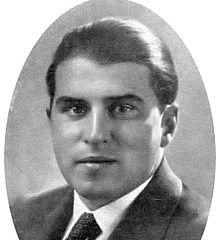
Carl Zuckmayer
Carl Zuckmayer

Carl Zuckmayer was a German writer born on December 27, 1896, and died on January 18, 1977. His works are known for their profound social insight and unique literary style. more

You May Also Like

“The summary of Lambert and Lillenfelt’s “Bloodstains” in Scientific American Mind in the October 12, 2007 The Informed Reader passes along many of these authors’ strong opinions on complex and controversial topics without informing the readership that the authors’ perspective is extreme, polarized, and vulnerable to challenge at many crucial points. It is clear that false memories can be implanted in about 25% of subjects, when those memories concern issues in the normal and expectable range of experience. However, about 75% of subjects resist such efforts, and efforts to implant memories of abuse or offensive medical procedures are almost universally rejected. Therefore a wholesale attack against therapies that explore patients’ memories is unwarranted. “Recovered Memory Therapy” is not a school of treatment. It is a slur used to mischaracterize approaches offensive to the authors’ perspectives, designed to evoke an emotional bias against those to whom the slur is applied.”

“[In a] recent PubMed and PsychAbstracts search... as we could not find a single reference for recovered memory therapy apart from those writing about its dangers. Our experience suggests that an overwhelming majority of clinicians do not assume or suggest to clients that they must have buried traumas from their past. It is also our experience that most clinicians are careful not to assume the literal veracity of reported traumatic memories, whether newly remembered or not." Cameron, C., & Heber, A. (2006). Re: Troubles in Traumatology, and Debunking Myths about Trauma and Memory/Reply: Troubles in Traumatology and Debunking Myths about Trauma and Memory. Canadian journal of psychiatry, 51(6), 402.”

“To what extent are such laboratory results generalizable to real traumatic experiences? Pezdek, Finger, and Hodge (1997) demonstrated the importance of event plausibility. Researchers were able to implant false memories of plausible events, such as being lost in a shopping mall, but were unsuccessful at causing participants to form false memories of implausible events, such as receiving an enema or participating in a religious ceremony from a tradition other than their own (Pezdek, Finger, & Hodge, 1997; Pezdek & Hodge, 1999). Besides failing to address event plausibility, laboratory experiments may also fail to capture emotions such as fear, shame, and betrayal that are often linked to interpersonal trauma." KNOWING AND NOT KNOWING ABOUT TRAUMA: IMPLICATIONS FOR THERAPY”

“Whatever people say about ‘false memories’ (which is mostly false, anyway) and whatever we feel about possibly making it all up, we can’t fake emotional illiteracy and screwed-up attachment patterns! That’s the real evidence of what happened to us. Someone who has had a car crash might have no memory of what happened, but they’ve got the evidence in terms of a mangled car and broken legs. I think it’s the same for us – we’ve got mangled emotions and broken personalities.”