Quotessence
Home / Quotes / Quote by Thomas Sowell

Quote by Thomas Sowell

“Page 141: Group Polarization Patterns Political anger and demands for privileges are, of course, not limited to the less privileged. Indeed, even when demands are made in the name of less privileged racial or ethnic groups, often it is the more privileged members of such groups who make the demands and who benefit from policies designed to meet such demands. These demands may erupt suddenly in the wake of the creation (or sharp enlargement) of a newly educated class which sees its path to coveted middle-class professions blocked by competition of other groups--as in India, French Canada, or Lithuania, for example. * * * A rapid expansion of education is thus a factor in producing inter-group conflict, especially where the education is of a kind which produces diplomas rather than skills that have significant economic value in the marketplace. Education of a sort useful only for being a clerk, bureaucrat, school teacher--jobs whose numbers are relatively fixed in the short run and politically determined in the long run--tend to increase politicized inter-group strife. Yet newly emerging groups, whether in their own countries or abroad, tend to specialize precisely in such undemanding fields. Malay students, for example, have tended to specialize in Malay studies and Islamic studies, which provide them with no skills with which compete with the Chinese in the marketplace, either as businessmen, independent professionals, or technicians. Blacks and Hispanics in the United States follow a very similar pattern of specializing disproportionately in easier fields which offer less in the way of marketable skills. Such groups then have little choice but to turn to the government, not just for jobs but also for group preferences to be imposed in the market place, and for symbolic recognition in various forms. *** While economic interests are sometimes significant in explaining political decisions, they are by no means universally valid explanations. Educated elites from less advanced groups may have ample economic incentives to promote polarization and preferential treatment policies, but the real question is why the uneducated masses from such groups give them the political support without which they would be impotent. Indeed, it is often the less educated masses who unleash the mob violence from which their elite compatriots ultimately benefit--as in Malaysia, Sri Lanka, or parts of India, Africa, or the United States, where such violence has led to group preference policies in employment, educational institutions, and elsewhere. The common denominator in these highly disparate societies seems to be not only resentment of other groups' success but also fear of an inability to compete with them, combined with a painful embarrassment at being so visibly "under-represented"--or missing entirely—in prestigious occupations and institutions. To remedy this within apolitically relevant time horizon requires not simply increased opportunities but earmarked benefits directly given on a racial or ethnic basis.”

Quote by Thomas Sowell

Work

Race And Culture: A World View

Browse quotes and source details for this work. more

Author
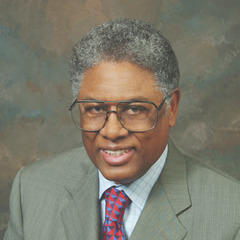
Thomas Sowell
Thomas Sowell

Thomas Sowell is a renowned economist, born on June 30, 1930. His research spans across various fields such as economic policy, race, and social issues, having a profound impact on economics and the social sciences. more

You May Also Like

“pp. 87-88: The usual way in which the media and politicians talk about race discrimination in the job market is to compare the percentage of Africans or Latins in a given occupation with the percentage of Europeans. This makes the situation look bad. The 2014–2018 American Community Survey found that Africans, at 13 percent of the population, accounted for only 3.6 percent of CEOs, 3.7 percent of physical scientists, 4.4 percent of civil engineers, 5.1 percent of physicians, and 5.2 percent of lawyers. Latin percentages in those prestigious occupations ranged from 5.3 to 7.6 percent, but Latins are almost 18 percent of the population, so their underrepresentation was nearly the same. The picture flips when race differences in cognitive ability and job performance are taken into account. Africans and Latins get through the educational pipeline with preferential treatment in admissions to colleges and to professional programs. Their mean IQs in occupations across the range from unskilled to those requiring advanced degrees are substantially lower than the mean IQs for Europeans in the same occupations. Race differences in measures of on-the-job performance are commensurate with the differences in cognitive ability. I think it is fair to conclude that the American job market is indeed racially biased. A detached observer might even call it systemic racism. The American job market systemically discriminates in favor of racial minorities other than Asians.”

“Page 65: The consistent findings about cognitive ability and job performance that apply most directly to group differences in cognitive ability are these: • Measures of cognitive ability and job performance are always positively correlated. • The size of the correlation goes up as the job becomes more cognitively complex. • Even for low-skill occupations, job experience does not lead to convergence in performance among persons with different cognitive ability. • For intellectually demanding jobs, there is no point at which more cognitive ability doesn’t make a difference. Increases in IQ scores are statistically associated with increases in productivity at every level of cognitive ability.”

“Page 67: For jobs that require a college degree, race differences in cognitive ability in the workplace should be minimized by the process of obtaining that college degree. But it hasn’t worked that way since at least the 1970s. Colleges have been complicit in transmitting the mean IQ differences by race in the general population not only through the college pipeline but through the graduate-education pipeline as well.” Page 76: The mean IQs of Africans and Latins increase with each higher category, just as the European means do, but the size of the difference generally keeps pace. In the case of the European–African difference, the size of the difference tends to increase along with IQ, from 1.01 SDs for occupations with European mean IQs under 100 to 1.20 SDs for European mean IQs of 110 or higher.”

“Page 46: Our picture suggests that for every person within the ranks of college graduates, there is another among those without a college degree who has just as high an IQ—or at least almost. And as for the graduates of the dozen top schools, … they too are apparently outnumbered by people with similar IQs who do not graduate from those colleges, or do not graduate from college at all.”

“Page 321: But after controlling for IQ, the picture reverses. The chance of entering a high-IQ occupation for a black with an IQ of 117 (which was the average IQ of all the people in these occupations in the NLSY sample) was twice the proportion of whites with the same IQ. Latinos with an IQ of 117 had more than a 50% higher chance of entering a high-IQ occupation than whites with the same IQ. This phenomenon applies across a wide range of occupations, as discussed in more detail in Chapter 20.”

“A 2002 Wall Street Journal article provided eye-opening details about how comprehensive review worked in practice. UCLA had accepted a Hispanic girl with SATs of 940, while rejecting a Korean student with 1500s. The Korean student hardly lived in the lap of luxury. He tutored children to pay rent for his divorced mother, who developed breast cancer.”

“It is, however, important to understand that giving a man his due may often mean giving him special treatment. I am aware of the fact that this has been a troublesome concept for many liberals, since it conflicts with their traditional ideal of equal opportunity and equal treatment of people according to their individual merits. But this is a day which demands new thinking and the reevaluation of old concepts. A society that has done something special against the Negro for hundreds of years must now do something special for him, in order to equip him to compete on a just and equal basis.”

“Affirmative action hiring pressures make it costly to have no minority employees, but continuing affirmative action pressures at the promotion and discharge phases also make it costly to have minority employees who do not work out well. The net effect is to increase the demand for highly qualified minority employees while decreasing the demand for less qualified minority employees or for those without a sufficient track record to reassure employers.”

“Wikipedia: Global South Global South "emerged in part to aid countries in the southern hemisphere to work in collaboration on political, economic, social, environmental, cultural, and technical issues." This is called South–South cooperation (SSC), a "political and economical term that refers to the long-term goal of pursuing world economic changes that mutually benefit countries in the Global South and lead to greater solidarity among the disadvantaged in the world system." The hope is that countries within the Global South will "assist each other in social, political, and economical development, radically altering the world system to reflect their interests and not just the interests of the Global North in the process." It is guided by the principles of "respect for national sovereignty, national ownership, independence, equality, non-conditionality, non-interference in domestic affairs, and mutual benefit.”