Quotessence
Home / Quotes / Quote by Angela Thirkell

Quote by Angela Thirkell

“It is true that christian-naming is so common as almost to have done away with the use of surnames, especially we regret to say, among men, but among the older generation the formality of title is less easily set aside, as Lydia with unusual perception had noted in the case of Lady Waring. In ordering Philip and Leslie to drop the prefix she had but done what anyone would do to contemporaries, probably thinking, if she did think about it, that she had eased their path. And indeed she would have eased it, or they would quite possibly have dropped into first names by themselves before long, had not each been touched in the heart by the other. To say Philip or Leslie offhand was to each, though they were not consciously aware of it, a faint impropriety, a pulling open of rose-petals which might hurt the rose, a digging up of the plant to see how it was growing.”

Quote by Angela Thirkell

Work

Growing up

This book delves into the complexities of growing up, examining the emotional, psychological, and social transitions individuals face during adolescence and early adulthood. more

Author
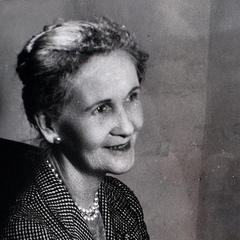
Angela Thirkell
Angela Thirkell

Angela Thirkell was an English novelist known for her light-hearted and humorous writing style, as well as her detailed portrayal of English rural life. Her works often featured satire and humor, showcasing social and human aspects, and were well-received by readers. more

You May Also Like

“Well, land sakes!" Hiro says. "Lookee here!" He whips his blade sideways, cutting off both of the businessman's forearms, causing the sword to clatter onto the floor. "Better fire up the ol' barbeque, Jemima!" Hiro continues, whipping the sword around sideways, cutting the businessman's body in half just above the navel. Then he leans down so he's looking right into the businessman's face. "Didn't anyone tell you," he says, losing the dialect, "that I was a hacker?" Then he hacks the guy's head off.”

“Another bullet hit Hajji Murad in the left side. He lay down in the ditch and again pulled some cotton wool out of his beshmet and plugged the wound. This wound in the side was fatal and he felt that he was dying. Memories and pictures succeeded one another with extraordinary rapidity in his imagination. now he saw the powerful Abu Nutsal Khan, dagger in hand and holding up his severed cheek as he rushed at his foe; then he saw the weak, bloodless old Vorontsov with his cunning white face, and heard his soft voice; then he saw his son Yusuf, his wife Sofiat, and then the pale, red-bearded face of his enemy Shamil with its half-closed eyes. All these images passed through his mind without evoking any feeling within him -- neither pity nor anger nor any kind of desire: everything seemed so insignificant in comparison with what was beginning, or had already begun, within him. Yet his strong body continued the thing that he had commenced. Gathering together his last strength he rose from behind the bank, fired his pistol at a man who was just running towards him, and hit him. The man fell. Then Hajji Murad got quite out of the ditch, and limping heavily went dagger in hand straight at the foe. Some shots cracked and he reeled and fell. Several militiamen with triumphant shrieks rushed towards the fallen body. But the body that seemed to be dead suddenly moved. First the uncovered, bleeding, shaven head rose; then the body with hands holding to the trunk of a tree. He seemed so terrible, that those who were running towards him stopped short. But suddenly a shudder passed through him, he staggered away from the tree and fell on his face, stretched out at full length like a thistle that had been mown down, and he moved no more. He did not move, but still he felt. When Hajji Aga, who was the first to reach him, struck him on the head with a large dagger, it seemed to Hajji Murad that someone was striking him with a hammer and he could not understand who was doing it or why. That was his last consciousness of any connection with his body. He felt nothing more and his enemies kicked and hacked at what had no longer anything in common with him. Hajji Aga placed his foot on the back of the corpse and with two blows cut off the head, and carefully -- not to soil his shoes with blood -- rolled it away with his foot. Crimson blood spurted from the arteries of the neck, and black blood flowed from the head, soaking the grass. Karganov and Hajji Aga and Akhmet Khan and all the militiamen gathered together -- like sportsmen round a slaughtered animal -- near the bodies of Hajji Murad and his men (Khanefi, Khan Mahoma, and Gamzalo they bound), and amid the powder-smoke which hung over the bushes they triumphed in their victory. the nightingales, that had hushed their songs while the firing lasted, now started their trills once more: first one quite close, then others in the distance. It was of this death that I was reminded by the crushed thistle in the midst of the ploughed field.”

“First, a Livarot, strong and herby, sassy as its green-striped paper casing. For subtle contrast, he went for two dozen Crottin de Chavignol. The cheese man tried to push the Bleu du Vercors. Gabe tasted and rejected it. "Your classic French mountain cheese," said the cheese man. He named three celebrity chefs. "Swear by it, they do, all three. Your classic creamy sauce cheese." Gabe moved about the van, paring and tasting, getting high on the fumes. He had decided he would take a ten-kilo Cantalet that had just enough hazelnut edge without it overwhelming the fresh milk flavor.”