Quotessence
Home / Quotes / Quote by Victor Hugo

Quote by Victor Hugo

“Questa luce, cioè la storia, è spietata; essa ha questo di strano e di divino, e cioè che quantunque sia luce, e precisamente perché è luce, mette spesso dell'ombra là dove si vedono raggi; dello stesso uomo fa due fantasmi differenti, e l'uno attacca l'altro, e ne fa giustizia, e le tenebre del despota lottano con lo splendore del capitano. Da qui, una misura più vera nell'apprezzamento definitivo dei popoli. Babilonia violata diminuisce Alessandro; Roma incatenata diminuisce Cesare; Gerusalemme uccisa diminuisce Tito. La tirannia segue il tiranno. E' una sventura per un uomo lasciare dietro di sé dell'ombra che ha la forma sua.”

Quote by Victor Hugo

Work

Les Misérables

Victor Hugo's 'Les Misérables' is an epic narrative that delves into the lives of various characters, including Jean Valjean, a former convict seeking redemption, and Fantine, a woman struggling in poverty. The story is rich in historical detail and moral complexity, offering a profound examination of society's flaws and the resilience of the human spirit. more

Author

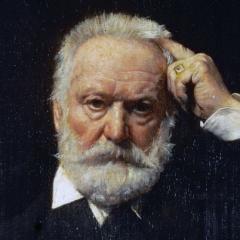
Victor Hugo
Victor Hugo

Victor Hugo, a French romantic poet, novelist, and playwright, was born on February 26, 1802, and died on May 22, 1885. He is considered one of the greatest writers in French literary history, known for his profound humanistic concerns and rich imagination. more

You May Also Like

“He was a fixture of the New Paltz community, an inexplicable light switch in the new apartment that definitely turns something on but you can't quite say what. You flick it whenever you get home and inexplicably feel a sort of relief, promising yourself that you'll figure out the wiring one of these days, but not today. Today, you are a bit too busy and this curious switch isn’t hurting anything by being a mystery.”

“Hermes smiled. "I knew a boy once ... oh, younger than you by far. A mere baby, really." Here we go again, George said. Always talking about himself. Quiet! Martha snapped. Do you want to get set on vibrate? Hermes ignored them. "One night, when this boy's mother wasn't watching, he sneaked out of their cave and stole some cattle that belonged to Apollo." "Did he get blasted to tiny pieces?" I asked. "Hmm ... no. Actually, everything turned out quite well. To make up for his theft, the boy gave Apollo an instrument he'd invented-a lyre. Apollo was so enchanted with the music that he forgot all about being angry." So what's the moral?" "The moral?" Hermes asked. "Goodness, you act like it's a fable. It's a true story. Does truth have a moral?" "Um ..." "How about this: stealing is not always bad?" "I don't think my mom would like that moral." Rats are delicious, suggested George. What does that have to do with the story? Martha demanded. Nothing, George said. But I'm hungry. "I've got it," Hermes said. "Young people don't always do what they're told, but if they can pull it off and do something wonderful, sometimes they escape punishment. How's that?”