Quotessence
Home / Quotes / Quote by Charles Dickens

Quote by Charles Dickens

“He [Old Mr. Turveydrop] was a fat old gentleman with a false complexion, false teeth, false whiskers, and a wig. He had a fur collar, and he had a padded breast to his coat, which only wanted a star or a broad blue ribbon to be complete. He was pinched in, and swelled out, and got up, and strapped down, as much as he could possibly bear.”

Quote by Charles Dickens

Work

Bleak House

Charles Dickens' 'Bleak House' is a profound and intricate novel set in the 19th century. It delves into the legal system and its impact on individuals, using the Jarndyce and Jarndyce case as a central narrative device. The story intertwines the lives of numerous characters, each facing their own struggles and challenges within the context of the law and the broader societal issues of the era. more

Author

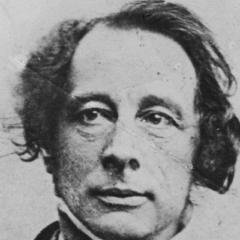
Charles Dickens
Charles Dickens

Charles Dickens, a British writer born on February 7, 1812, and died on June 9, 1870, is one of the greatest novelists of the 19th century. Known for his profound social criticism and vivid narrative style, Dickens' works extensively cover social reality, revealing various issues in the British society of the time. more

You May Also Like

“Living with the daily ugliness of slum life, educational castration and economic exploitation, some ghetto dwellers now and then strike out in spasms of violence and self-defeating riots. A riot is at bottom the language of the unheard. It is the desperate, suicidal cry of one who is so fed up with the powerlessness of his cave existence that he asserts that he would rather be dead than ignored.”

“If administration actions are not to mock its own rhetoric, the President must now take the lead in mobilizing public opinion behind a new resolve to meet the crisis in our cities. He should now put before Congress a National Emergency Public Works and Reconstruction bill aimed at building housing for homeless victims of the riot-torn ghettos, repairing damaged public facilities, and in the process generating maximum employment opportunities for unskilled and semiskilled workers. Such a bill should be the first step in the imperative reconstruction of all our decaying center cities. Admittedly, the prospects for passage of such a bill in the present Congress are dismal. Congressmen will cry out that the rioters must not be re-warded, thereby further penalizing the very victims of the riots. This, after all, is a Congress capable of defeating a meager $40 million rat extermination program the same week it votes $10 million for an aquarium in the District of Columbia! But the vindictive racial meanness that has descended upon this Congress, already dominated by the revived coalition of Republicans and Dixiecrats, must be challenged—not accommodated. The President must go directly to the people, as Harry Truman did in 1948. He must go to them, not with slogans, but with a timetable for tearing down every slum in the country. There can be no further delay. The daydreamers and utopians are not those of us who have prepared massive Freedom Budgets and similar programs. They are the smugly "practical" and myopic philistines in the Congress, the state legislatures, and the city halls who thought they could sit it out. The very practical choice now before them and the American people is whether we shall have a conscious and authentic democratic social revolution or more tragic and futile riots that tear our nation to shreds.”

“It follows that the one thing we should not do to the men and women of past time, and particularly if they ghost through to us as larger than life, is to take them out of their historical contexts. To do so is to run the risk of turning them into monsters, whom we can denounce for our (frequently political) motives—an insidious game, because we are condemning in their make-up that which is likely to belong to a whole social world, the world that helped to fashion them and that is deviously reflected or distorted in them. Censure of this sort is the work of petty moralists and propagandists, not historians (p. 5).”