“I Dwelt alone In a world of moan, And my soul was a stagnant tide, Till the fair and gentle Eulalie became my blushing bride- Till the yellow-haired young Eulalie became my smiling bride Ah, less-less bright The stars of night Than the eyes of the radiant girl! And never a flake That the vapor can make With the moon-tints of purple and pearl, Can vie with the modest Eulalie's most unregarded curl- Can vie compare with the bright-eyed Eulalie's most humble and careless curl Now Doubt-now Pain Come never again, For her soul gives me sigh for sigh, And all day long Shine, bright and strong, Astarte within the sky, While ever to her dear Eulalie upturns her matron eye- While ever to her young Eulalie upturns her violet eye.”
Quote by Edgar Allan Poe
Author
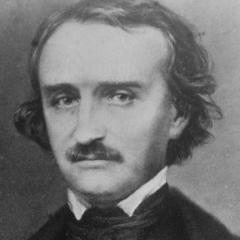
Edgar Allan Poe
American author, poet, editor, and literary critic. Known for his short stories and poetry, particularly his works of horror and mystery. His most famous works include 'The Black Cat', 'The Raven', and 'Annabel Lee'. more
You May Also Like
“The more titles you carry with you, the more masks you find yourself hiding behind.”
Source: Delphine and the Silver Needle
Source: Hood Feminism: Notes from the Women That a Movement Forgot
Source: Where the Sidewalk Ends
Source: Marx, Women, and Capitalist Social Reproduction: Marxist Feminist Essays
Source: Disintegration: The Splintering of Black America
Source: Rubyfruit Jungle
Source: Walden or, Life in the Woods
Source: Capital and Ideology
Source: Marx, Women, and Capitalist Social Reproduction: Marxist Feminist Essays
Source: Marx, Women, and Capitalist Social Reproduction: Marxist Feminist Essays