Quotessence
Home / Quotes / Quote by Myles Horton

Quote by Myles Horton

Work

We Make the Road by Walking: Conversations on Education and Social Change

We Make the Road by Walking is a compilation of discussions that examine the profound impact of education on social transformation. The book features insights from the author regarding the principles and practices of education that can lead to meaningful societal change. more

Author
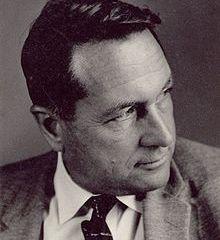
Myles Horton
Myles Horton

Myles Horton was an American educator and social activist known for his contributions to adult education and the social justice movement. He was born on July 9, 1905, and passed away on January 19, 1990. more

You May Also Like

“We all know many people who come from hard-working families, where they had to grow up with a bare minimum and become self-sufficient and independent at a very young age. We look at them now and see responsible citizens, self-reliant adults, successful members of the business community, outstanding performers, and just happy people. Yes, they’re happy, because they know the meaning of labor, they appreciate the pleasure of leisure, they value relationships with others, and they respect themselves. In contrast, there are people who come from wealthy families, had nannies to do everything for them, went to private schools where they were surrounded with special attention, never did their own laundry, never learned how to cook an omelet for themselves, never even gained the essential skills of unwinding on their own before bedtime, and of course, never did anything for anyone else either. You look at their adult life and see how dependent they are on others and how unhappy they are because of that. They need someone to constantly take care of them. They may see no meaning in their life as little things don’t satisfy them, because they were spoiled at a very young age. They may suffer a variety of eating disorders, use drugs, alcohol and other extremes in search of satisfaction and comfort. And, above all, in search of themselves.”

“Dickinson left the rostrum to applause, loud shouts of approval. Franklin was surprised, looked toward Adams, who returned the look, shook his head. The chamber was dismissed, and Franklin pushed himself slowly up out of the chair. He began to struggle a bit, pain in both knees, the stiffness holding him tightly, felt a hand under his arm. “Allow me, sir.” Adams helped him up, commenting as he did so, “We have a substantial lack of backbone in this room, I’m afraid.” Franklin looked past him, saw Dickinson standing close behind, staring angrily at Adams, reacting to his words. “Mr. Dickinson, a fine speech, sir,” said Franklin. Adams seemed suddenly embarrassed, did not look behind him, nodded quickly to Franklin, moved away toward the entrance. Franklin saw Dickinson following Adams, began to follow himself. My God, let’s not have a duel. He slipped through the crowd of delegates, making polite acknowledgments left and right, still keeping his eye on Dickinson. The man was gone now, following Adams out of the hall. Franklin reached the door, could see them both, heard the taller man call out, saw Adams turn, a look of surprise. Franklin moved closer, heard Adams say, “My apologies for my indiscreet remark, sir. However, I am certain you are aware of my sentiments.” Dickinson seemed to explode in Adams’ face. “What is the reason, Mr. Adams, that you New England men oppose our measures of reconciliation? Why do you hold so tightly to this determined opposition to petitioning the king?” Franklin heard other men gathering behind him, filling the entranceway, Dickinson’s volume drawing them. He could see Adams glancing at them and then saying, “Mr. Dickinson, this is not an appropriate time...” “Mr. Adams, can you not respond? Do you not desire an end to talk of war?” Adams seemed struck by Dickinson’s words, looked at him for a long moment. “Mr. Dickinson, if you believe that all that has fallen upon us is merely talk, I have no response. There is no hope of avoiding a war, sir, because the war has already begun. Your king and his army have seen to that. Please, excuse me, sir.” Adams began to walk away, and Franklin could see Dickinson look back at the growing crowd behind him, saw a strange desperation in the man’s expression, and Dickinson shouted toward Adams, “There is no sin in hope!”

“I mean to tell you, the Law's notion of justice is more cold-blooded than any outlaw I ever knew. And I mean 'outlaw,' not criminal. 'Criminal' doesn't distinguish between guys like men and the guys who own the banks and insurance companies and stock markets, who own the factories and coal mines and oil fields, who own the goddamn Law. I once said to John that being an outlaw was about the only way left for a man to hold on to his self-respect, and he said Ain't that the sad truth. The girls laughed along with us because they knew it wasn't a joke.... John got the publicity because he loved it ... he carried on like the whole thing was an adventure movie and he was Douglas Fairbanks. He wanted to to be a 'star.' That's how he was. Not me. I never even liked having my picture taken. All I ever wanted was to show the bastards who own the law that it didn't mean they owned me.”