Quotessence
Home / Quotes / Quote by Rachel Cusk

Quote by Rachel Cusk

“He knew that [his work] embodied change, and he wasn’t interested in change. He was interested in the fragments that change leaves behind in its storming passage toward the future.”
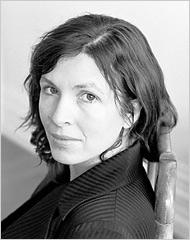
Quote by Rachel Cusk

Book:Parade

Work

Parade

Browse quotes and source details for this work. more

Author

Rachel Cusk
Rachel Cusk

Rachel Cusk, born in 1967, is a distinguished British novelist. Her works are renowned for their unique narrative style and profound insights into modern life. Cusk's writing spans a range of themes including personal experience, family relationships, and social change, and has garnered widespread acclaim from readers. more

You May Also Like

“Chris’ second letter was less noble. She started off by rhapsodizing once again about Dick’s face: “I started looking at your face that night in the restaurant—oh wow, isn’t that like the first line in the Ramones song, ‘Needles & Pins’? ‘I saw your face/It was the face I loved/And I knew’—and I got the same feeling from it that I get every-time I hear that song, and when you called my heart was pounding and then I thought that maybe we could do something together, something that is to adolescent romance what the Ramone’s cover of the song is to the original. The Ramones give ‘Needles & Pins’ the possibility of irony, but the irony doesn’t undercut the song’s emotion, it makes it stronger and more true. Søren Kierkegaard called this “the Third Remove.” In his book ‘The Crisis In The Life Of An Actress’, he claims no actress can play 14-year-old Juliette until she’s at least 32. Because acting’s art, and art involves reaching through some distance. Playing the vibrations between here and there and then and now. And don’t you think reality is best attained through dialectics? PS, Your face is mobile, craggy, beautiful…”

“With the advent of the first truly revolutionary means of reproduction, photography, simultaneously with the rise of socialism, art sensed the approaching crisis which has become evident a century later. At the time, art reacted with the doctrine of l'art pour l'art, that is, with a theology of art. This gave rise to what might be called a negative theology in the form of the idea of "pure" art, which not only denied any social function of art but also any categorizing by subject matter.”

“One of the soul's great tragedies is to execute a work and then realize, once it's finished, that it's not any good. The tragedy is especially great when one realizes that the work is the best he could have done. But to write a work, knowing beforehand that it's bound to be flawed and imperfect; to see while writing it that it's flawed and imperfect--this is the height of spiritual torture and humiliation.”