Quotessence
Home / Quotes / Quote by Terry Pratchett

Quote by Terry Pratchett

“Lady Ramkin drawing herself up haughtily was not a sight to forget, although you could try. It was like watching continental drift in reverse as various subcontinents and islands pulled themselves together to form one massive, angry protowoman.”

Quote by Terry Pratchett

Work

Guards! Guards!

Browse quotes and source details for this work. more

Author

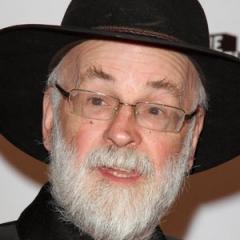
Terry Pratchett
Terry Pratchett

Terry Pratchett was a British author renowned for his fantasy novel series, 'Discworld'. His works are appreciated for their unique humor and profound philosophical insights. Pratchett's contributions to literature extend beyond fantasy, encompassing science fiction, humor, and children's literature. more

You May Also Like

“The theme of translation has a long history in psychoanalysis. It retains significance as a term that represents three related ideas: a language change, a movement across a psychic boundary, and the transference of an object relationship. Freud's terms Übertragung [transference, transmission] and Ubersetzung [translation] carry all of these connotations, for they both mean bringing something across, or carrying something over. The etymology of the related word 'metaphor' derives from a literal Greek version of the Latin of transference (both meaning 'carrying beyond or across'). Similarly, we can include the related term 'interpretation,' which certainly describes a transfer of meaning or a translation of one set of terms into another. Again the Greek word metaphrase unites these two meanings, and a metaphrastis is a translator. In a similar vein, the Yiddish expression fartaysthn means to translate and to explain (Bloom, 2008).”

“Now, I want to make clear that I am myself using these terms as metaphors for the different ways we construe fields or sets of phenomena in order to 'work them up' into possible objects of narrative representation and discursive analysis. Anyone who originally encodes the world in the mode of metaphor, will be included to decode it – that is, narratively 'explicate' and discursively analyze it – as a congeries of individualities.”

“Metaphor: «Tan introducido estáis ya entre los quehaceres del maligno que habéis olvidado hasta de dónde venís, pues aquí os devoran en cuerpo y alma, cual cuervos que no siegan ni siembran, sin granero ni alfolí, pues son como lirios. Y ya veis cómo crecen, que ni hilan y enloquecen» Answer: El texto sugiere que las personas han caído en la maldad y han perdido la conexión con su verdadera esencia. A pesar de su falta de esfuerzo productivo, su influencia malévola se expande y crece. Es una reflexión sobre cómo las personas pueden perderse en la maldad y olvidar quiénes son realmente. En este contexto, el uso simbólico de los lirios en el texto nos remite a una referencia bíblica en el Evangelio de Mateo. Jesús, al hablar de los lirios del campo, enseñó sobre la providencia divina y la importancia de confiar en Dios. Los lirios, aunque no hilan ni trabajan, son vestidos por Dios con belleza y esplendor.”

“Metaphor: «No desesperéis, sir Roberto, que en tierra yugada por la yunta, no rondan gusanos ni viles que ensucien las manos» Answer: El verso significa que no debe perder la esperanza, porque en la tierra que ha sido arada por la yunta (la pareja de bueyes unidos por el yugo) no hay gusanos ni cobardes que puedan manchar sus manos. La palabra yugada se refiere al espacio de tierra de labor que puede arar una yunta en un día, y también es una medida agraria que varía según las zonas.”