Quotessence
Home / Quotes / Quote by Miguel Delibes

Quote by Miguel Delibes

“Su estado de ánimo ante la Mica era un caso especial, diferente del estado de ánimo de sus amigos. Y si no, ¿por qué Roque, el Moñigo, o Germán, el Tiñoso, no adelgazaban tres kilos si la Mica marchaba a América, o un par de ellos si solo se desplazaba a la ciudad, o engordaban lo perdido y un kilo más cuando la Mica retornaba al valle por una larga temporada?”

Quote by Miguel Delibes

Work

El camino

Browse quotes and source details for this work. more

Author

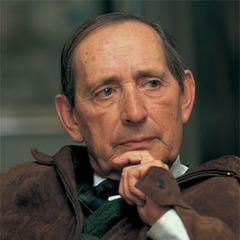
Miguel Delibes
Miguel Delibes

Miguel Delibes, born on October 17, 1920, was a renowned Spanish novelist. His works, which primarily focus on depicting rural life in Spain, have won the hearts of readers. Delibes passed away on March 12, 2010. more

You May Also Like

“As a boy, Ogion like all boys had thought it would be a very pleasant game to take by art-magic whatever shape one liked, man or beast, tree or cloud, and so to play at a thousand beings. But as a wizard he had learned the price of the game, which is the peril of losing one's self, playing away the truth. The longer a man stays in a form not his own, the greater this peril. Every prentice-sorcerer learns the tale of the wizard Bordger of Way, who delighted in taking bear's shape, and did so more and more often until the bear grew in him and the man died away, and he became a bear, and killed his own little son in the forests, and was hunted down and slain. And no one knows how many of the dolphins that leap in the waters of the Inmost Sea were men once, wise men, who forgot their wisdom and their name in the joy of the restless sea.”

“A man is born; his first years go by in obscurity amid the pleasures or hardships of childhood. He grows up; then comes the beginning of manhood; finally society's gates open to welcome him; he comes into contact with his fellows. For the first time he is scrutinized and the seeds of the vices and virtues of his maturity are thought to be observed forming in him. This is, if I am not mistaken, a singular error. Step back in time; look closely at the child in the very arms of his mother; see the external world reflected for the first time in the yet unclear mirror of his understanding; study the first examples which strike his eyes; listen to the first word which arouse with him the slumbering power of thought; watch the first struggles which he has to undergo; only then will you comprehend the source of the prejudices, the habits, and the passions which are to rule his life.”